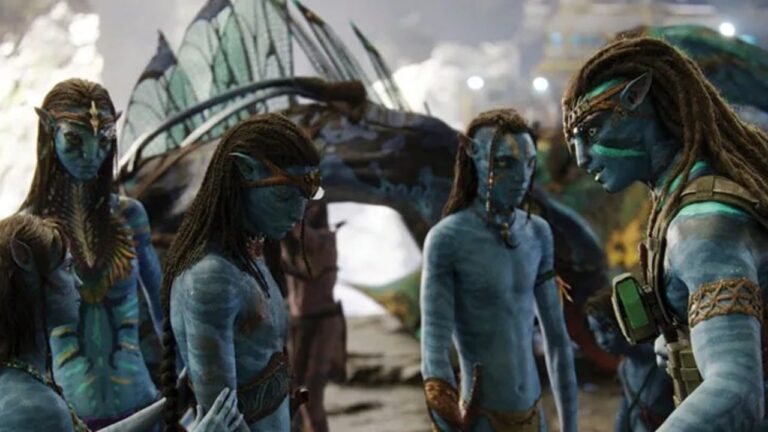
Well, it’s true that James Cameron’s Avatar has always been more than the “blue alien movie” most people jokingly reduce it to, and as we revisit the first film ahead of Avatar: Fire and Ash arriving in December 2025, we can finally see how much ambition and innovation were poured into each and every frame. As we know, Avatar revived the market for 3D and, honestly, reinvented blockbuster filmmaking in the 21st century. And as the audiences and fans of Cameron’s work, we often forget that it took nearly five years of production and years of technological development just to reach a point where his vision could exist on screen at all.
While rewatching the film, we are brought right back to Jake Sully’s voiceover, a dead marine’s brother, as he wakes from cryosleep. His life has unraveled, but he is suddenly offered a second chance on Pandora. As we follow him through Hell’s Gate, we see the RDA’s militarized grip over the moon and understand why the Na’vi view humans as destroyers rather than mere explorers. And as we see the scorpions, the AMP suits, and the massive industrial machinery tearing into Pandora, we start realizing how sharply Cameron contrasts nature and exploitation. It’s a theme we have seen before in his work, but here it becomes the backbone of an entire universe.
Every feature balances alienness with human emotion as humanity collapse back on Earth
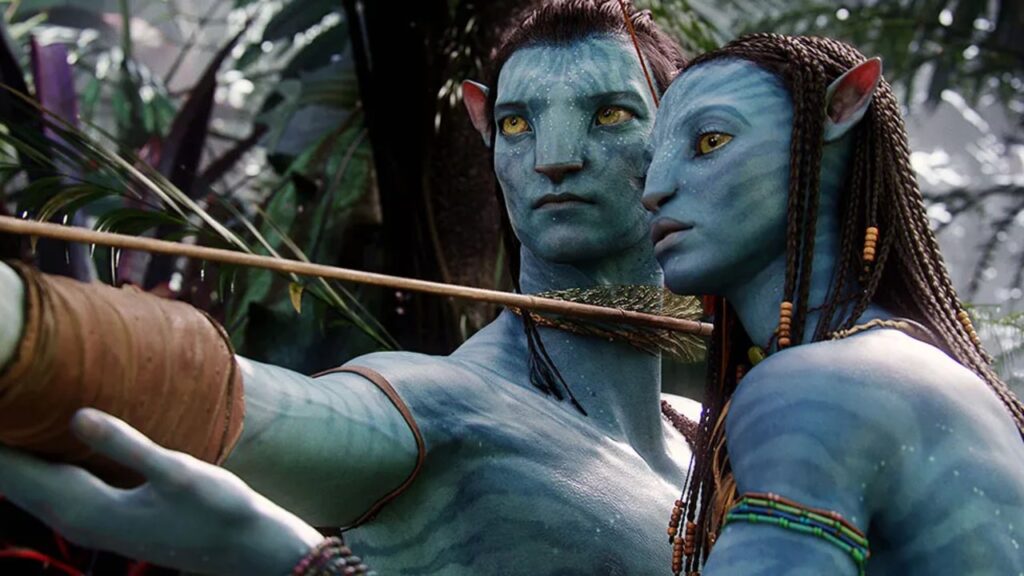
What we are also reminded of is how much meticulous world-building went into the Na’vi themselves, starting from everything, the four-finger anatomy, the neural queue, and the lemur-like shape of their eyes were crafted deliberately to balance the alien essence with emotional relatability so that they are intelligent with a heart like humans. And as the audiences and fans, we understand why Jake’s evolving bond with Neytiri only works because their connection feels grounded in something authentically performed. The performance-capture technology Cameron developed with Weta allowed every micro-expression to transfer from actor to character, and as we see now, it’s the ultimate secret ingredient that made Pandora feel alive rather than animated in all these years.
But at the same time, the extended cuts remind us how broken Earth is by 2154. We see hints of overpopulation, climate collapse, and vanishing wildlife, all silently suggesting to us that why humanity became desperate enough to strip-mine Pandora in the first place. It’s honestly the world-building, as it deepens the emotional weight of Jake’s transformation, especially when he ultimately chooses the Na’vi and awakens in his new body.
As most of us are revisiting the OG Avatar and The Way of Water, we understand and see why it earned nearly three billion dollars and reshaped the history of cinema. And with the next chapter on the way, returning to Pandora feels less like stepping back into a story that always had the room to grow and evolve into the big franchise it deserves to be in today’s generation.