The AI revolution has caught the Hollywood industry by storm. Recently, Netflix acquired Ben Affleck‘s AI film-technology startup, InterPositive, which is designed to make post-production easier. Interestingly, Seth MacFarlane experimented with AI in the Ted franchise as it slowly makes inroads into the film and television industry.
Seth MacFarlane talks about AI’s rightful place in the film industry
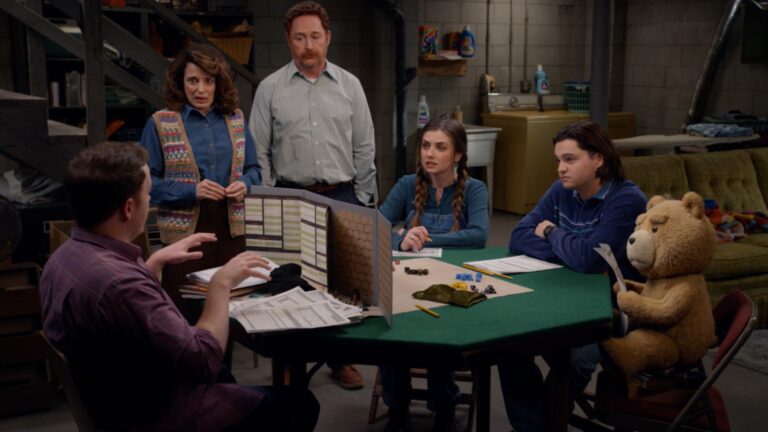
In an interview with the Associated Press, MacFarlane acknowledged using AI during the filming of Ted Season 2, which premiered on Peacock on March 5, 2026. He stated that he had to use artificial intelligence to transform himself into former U.S. President Bill Clinton for the show. When traditional filmmaking techniques failed, the multi-talented entertainer resorted to AI.
He emphasized that he wanted the audience to focus on the jokes rather than be distracted by “weird CGI.” “It’s a really interesting example of how, in the future, AI can be used as a tool without trampling any of the traditional art that we do. I think there is a balance,” he further added.
“It was an interesting experiment. We tried makeup, prosthetics. We tried traditional CGI. Everything looked terrifying. And finally, we were like, let’s try AI and see what happens,” MacFarlane said.
To bolster his argument about using AI to enhance art, the comedy auteur spoke about how the legendary musician Frank Sinatra transitioned from an “RCA ribbon mic” to the “Neumann U47” to improve the quality of his vocals. “That’s what he used because it was a better tool for what he needed in the moment. That’s how things are going to land, at least in the immediate future.”
Safe to say, Seth MacFarlane clearly believes that creativity can thrive in the industry alongside AI, as long as AI is used as a tool to support and enhance creativity. In fact, MacFarlane’s views align with Ben Affleck’s ideas for his film-technology startup, InterPositive, which aimed to leave the more technical aspects of postproduction to AI while filmmakers and other industry practitioners retained creative control.
These are interesting times for the industry, and it remains to be seen what further changes AI will bring to the movie-making business.