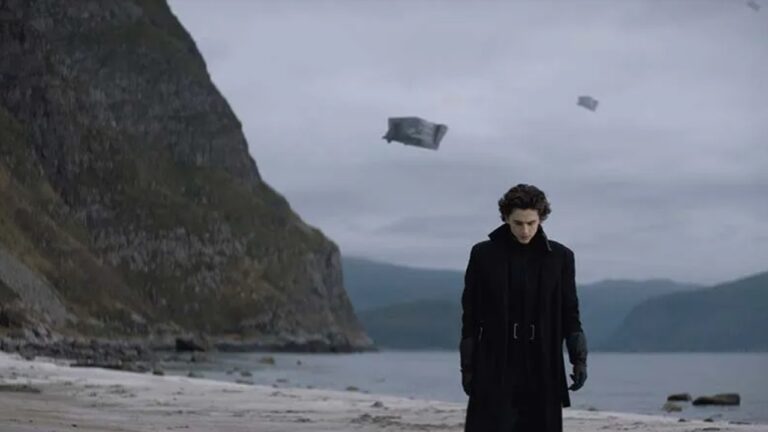
Those who have read all the Dune novels know what the real story is and how everything unfolds, but putting it up to the standards of viewing on the silver screen has always been a debate. People have their own opinions, especially after discovering that Denis Villeneuve’s Dune is not the only Dune movie to exist. People often forget that before him, it was David Lynch who was blown away by the story created by Frank Herbert.
And honestly, it’s unbelievable to watch how two completely different filmmakers across forty years approached the same story with such different instincts and storytelling power.
Two Pauls, two worlds, and two completely different destinies
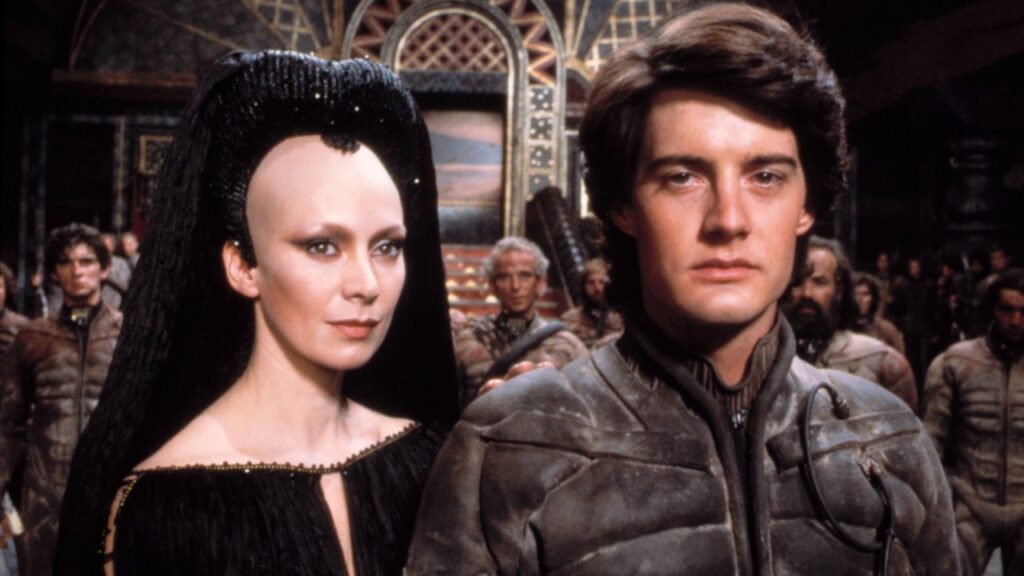
When we look at and revisit the worldbuilding around Paul Atreides in both versions, the contrast is immense, with huge gaps that immediately get to us.
The people of this generation have already witnessed how Villeneuve frames Paul as a calm but conflicted presence who walks into the Gom Jabbar test as if he is stepping into a prophecy he already feels looming over him.
But at the same time, when we look at David Lynch’s Paul, he carries a very melodramatic intensity, moving almost puppet-like under the Reverend Mother’s voice, which feels less like spiritual coercion and more like literal mind control that it can’t be ignored.
Even the simple act of placing his hand in the box shows how far apart the visions are, because Lynch never lingers on the box or the needle. But then again, Villeneuve shoots them like ancient relics, carved with history and weight, making the test feel like a sacred rite rather than a sci-fi rendezvous.
And what gets all of us the most is the huge contrast that we realize when we look at the world-building, because the divergence only widens our understanding and perspective of how each of the them had a vision to create Lisan Al Gaib. Lynch’s Dune is drenched in ornate sets, matte paintings, and a grimy industrial vibe that revolves around the idea of Islam.
Because when we think of harsh climatic environments and deserts that pop up out of nowhere, we see religious people who have their faith in their own Almighty. But when we look at Villeneuve’s Geidi Prime, it honestly feels like a fever dream that oozes machinery and biological horror. His idea of leaning into vastness, letting Arrakis swallow the characters with giant frames, grounded lighting, and an atmosphere that feels so tactile you can almost taste the dust.
His Geidi Prime is stripped, alien, and brutal in its minimalism, and his Arrakis is staged like a mythic earth, which is massive, ancient, and alive. It’s the difference between a theatrical epic and a prestige sci-fi drama, and both approaches say something about their eras and in what ways they were made.
Of course technological advancement wasn’t the way it is today in the filming industry. Yet the pacing might be the biggest dividing line when we compare them despite of the years they were made.
Lynch had two hours to adapt Herbert’s entire novel, so plot points fly past at breakneck speed, and everything is so rushed that made it very overwhelming and difficult to grasp. We see Paul meeting the Fremen, winning a duel, choosing his name, and becoming their leader almost before we even have the time to breathe.
Dune becomes a study of the filmmaker behind it
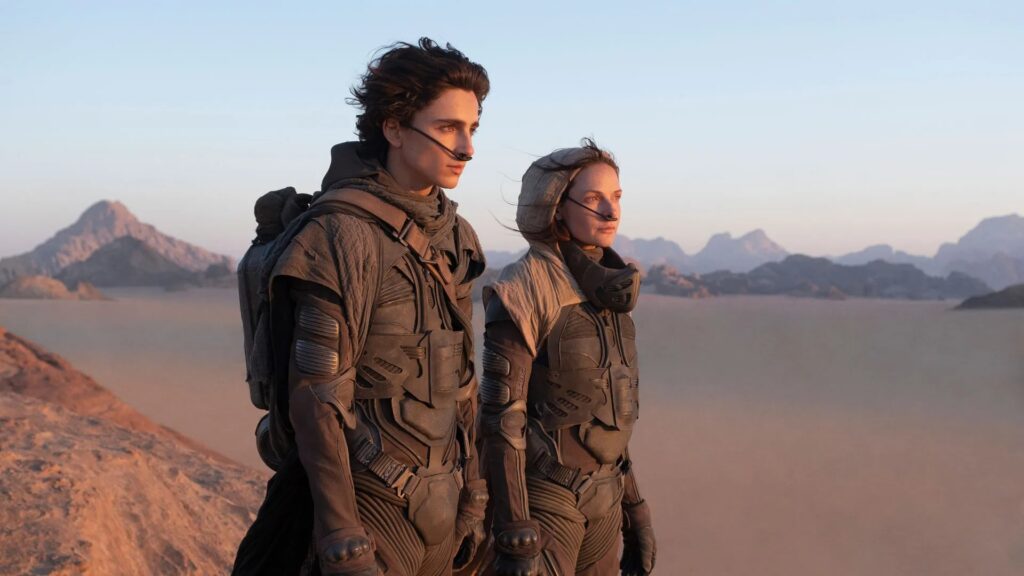
Thankfully, Villeneuve spreads half the story over two films, letting political tension, prophecy, religion, and culture settle naturally. Characters speak new languages, rituals unfold slowly, and the camera stays long enough for subtext to bloom. We can legitimately feel the scale of the universe instead of having it explained through constant voice-overs and inner monologues.
And yet, both films share the same bones by defining the same betrayal on Arrakis, a broken noble house, a prophetic boy running into the desert, the rise of Muad’Dib, and a final collision with Feyd-Rautha.
Still, the storytelling philosophy couldn’t be more different. Lynch chose the idea of the strange, the cooped-up camps, and the surreal, building something unforgettable even when it buckles under its own ambition. On the other hand, Villeneuve chases total immersion, grounding the myth in realism and mood.
Watching them side by side becomes a study in how the same tale can transform entirely depending on who tells it, proving that Dune is a story that was always meant to be built around the idea of a cinematic landscape shaped by the hands that dare to enter it.