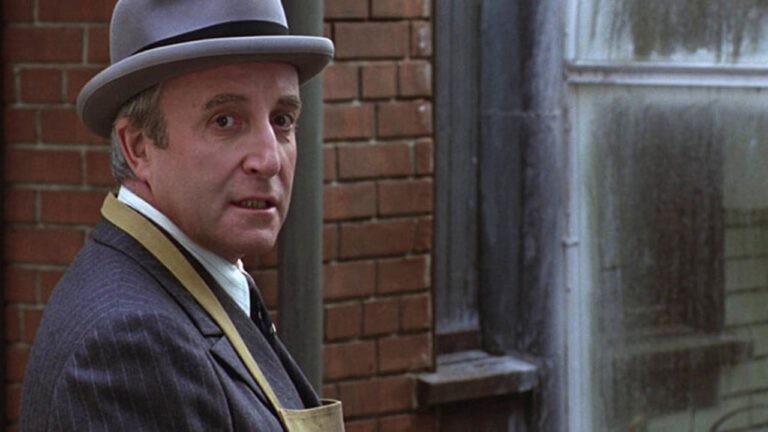
Being There, Hal Ashby’s film of 1979, is far more biting with each successive scene. At one level, it is nothing less than a comedy of manners with an eminently ridiculous misunderstanding at its core. But it is also perhaps nothing less than the most acute critique of American media culture and politics, and howsoever easy it is to create authority out of nothing. And it is this aspect of Being There that remains pertinent even today.
The most controlled act of his career is given by Peter Sellers as Chance, a man who is middle-aged and whose existence has up until now been confined within the walls of his Washington, D.C., townhouse, caring for his garden and understanding the world only through television. Upon his employer’s death, Chance is forced outside, and the modern world takes him not as an innocent but as a tabula rasa on which it projects its own fantasy images. A mistaken introduction leads from Chance the gardener to Chauncey Gardiner, and after that, illusion crystallizes into social reality.
Power, projection, and television logic
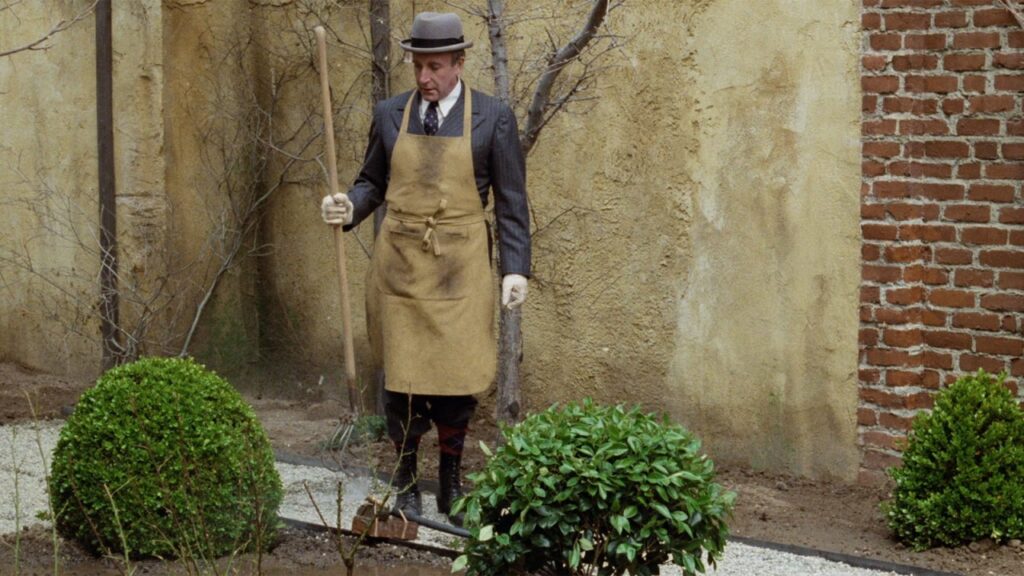
Chance’s rise is not based on ambition or intelligence but on tone. His literalness is a comfort to a society of coded speakers, a voiceover remarks. Ambiguous politicians perceive Chance’s literal comments on gardening—times of the year, planting, and waiting—for what they truly represent: economic ideologies. He is quoted by the President. He is invited on TV shows. He is consulted by foreign ambassadors at state functions. One of the most important aspects of this film is that the system does not value knowledge but the appearance of it.
Television is not merely Chance’s education; television is the logic of Chance’s surrounding society. The rest of humanity functions on the same mediated instinct, confusing visibility with legitimacy. Chance doesn’t manipulate others. Chance doesn’t lie. The satire is biting without. The hypocrisy is a collective act, not an individual act. In a statement that reflects this, no government agency can find any information on Chauncey Gardiner’s past. It only serves to add to his mystique.
In Melvyn Douglas’s role as Ben Rand, there is something reassuring about the simplicity that Chance embodies. As a dying industrialist, it is not truth that Ben seeks so much as consolation, and Chance offers it with ease. For Shirley MacLaine’s character, Eve, emotional shallowness is conflated with emotional richness, as she projects desire when there is no corresponding reciprocation.
Even as Chance reveals that he is just a gardener, the declaration is simply relegated to the background, since the truth would destroy the illusion that everyone else holds on to. The last image, Chance walking on the surface of a lake, has frequently been interpreted as mystical and symbolic. If one looks at it literally, it fits the logic of the film perfectly: as long as no one calls it into question, it is true. Being There ends, then, on a note of acceptance, on the acceptance of the lie.