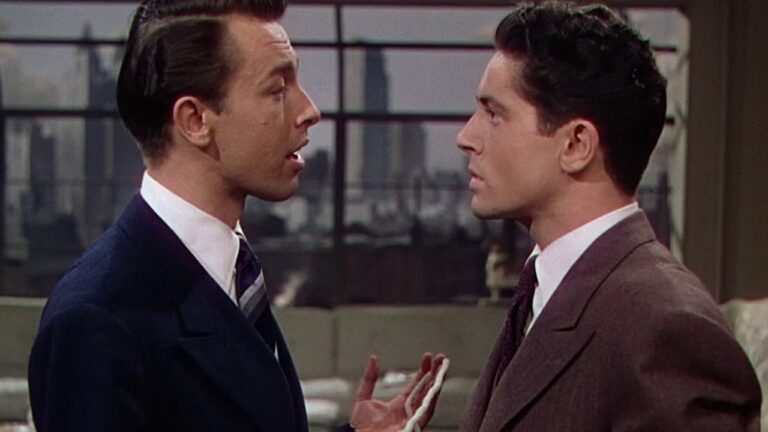
Alfred Hitchcock’s Rope (1948) is a singularly unusual entry in Hitchcock’s oeuvre, both technologically experimental and philosophically provocative. Based on a play by Patrick Hamilton, although loosely inspired by the infamous murder case of Leopold and Loeb, the film reduces an entire city to a pressure chamber, where notions of superiority, guilt, and responsibility are systematically dismantled. Initially panned by critics, it is now recognized as one of Hitchcock’s most intellectually challenging films.
The story begins with the crime having already taken place. Brandon Shaw and Phillip Morgan kill David Kentley, their former schoolmate, by strangulation and bury his body inside a wooden chest. Oddly enough, instead of fleeing the crime scene, they decide to host a dinner party, with food served on top of the very chest that contains the body. Their motivations for committing such an atypical crime lie solely in their pride.
A real-time thriller based on control
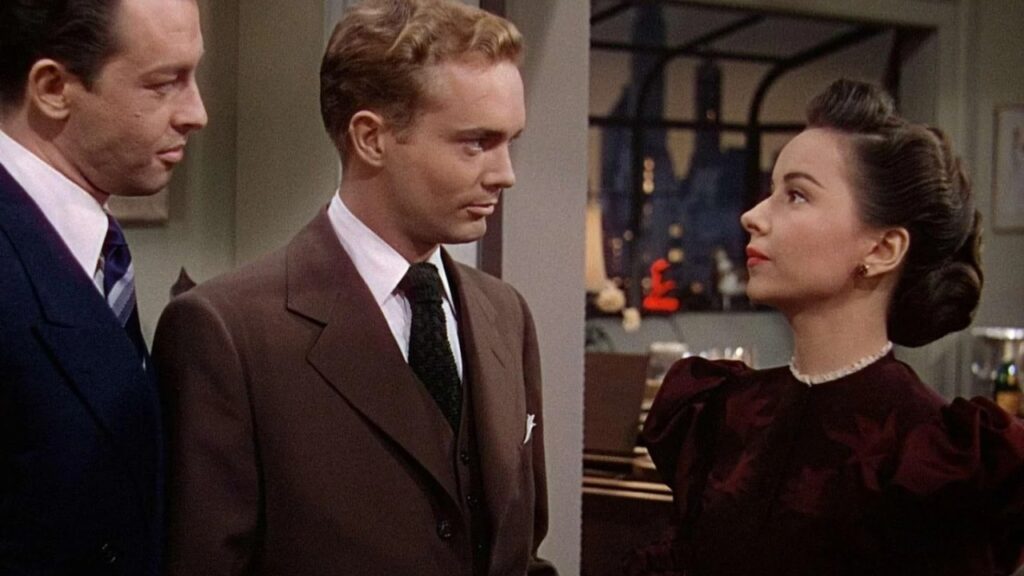
Rope happens in almost real time and unfolds with the intention of seeming like a series of long takes that have been edited together to eliminate cuts. All of this works towards locking the viewer in the apartment, much like the characters are trapped there as a result of their decisions. All this happens without any action but through dialogue and looks.
The movie is led by James Stewart’s Rupert Cadell. As Brandon and Phillip’s former schoolmaster, Rupert symbolizes the threat of ideas that lack responsibility. Hitchcock slowly transitions the movie from showing the arrogance of criminals to delving into issues of moral accountability by using dialogue to develop the tension in the movie.
Ideology and guilt
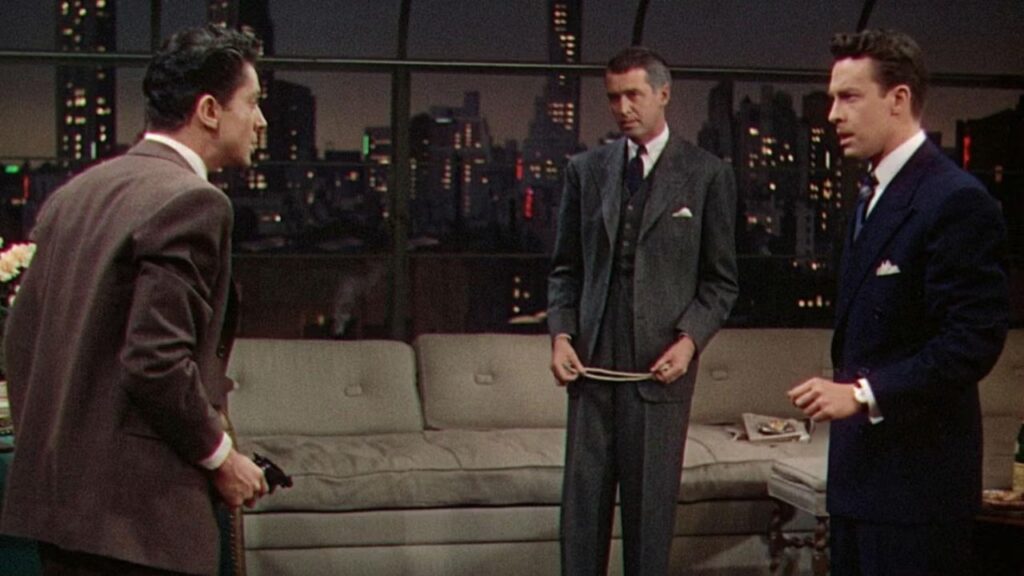
The difference between the two murderers fuels the psychological drama. Brandon is calculated, dramatic, and craving attention. Phillip is fragile, agitated, and crumbling under the weight of guilt. As guests start wondering where David is, Phillip becomes more agitated and anxious, while Brandon becomes brazenly confident.
The dinner party becomes a social minefield. David’s father inadvertently walks out with the books that were bound with the rope used to murder his son. His aunt insists on saying things that come out with ‘cruel irony,‘ as Hitchcock employs these instances to emphasize that ‘the effects of a murder may not remain confined to the victim alone.’
Rupert’s discovery of the body is not so much a triumph as a reckoning. He understands that his abstract musing about a concept of superiority condoned actual violence. The ending gunshots, which signal a call to the police, could not be more contrary to heroics; they represent an act of repudiation.
At first, Rope earned only ridicule from both reviewers and audiences, but in the intervening decades, it has grown in respect. The work’s interest may rest in its experiment, but its longevity comes from its refusal to glorify intelligence divorced from ethics. Hitchcock does not provide redemption in entertainment but merely a room where nothing changes, a completed crime, and a gradual revealing of the ways in which ideas may so readily become excuses.