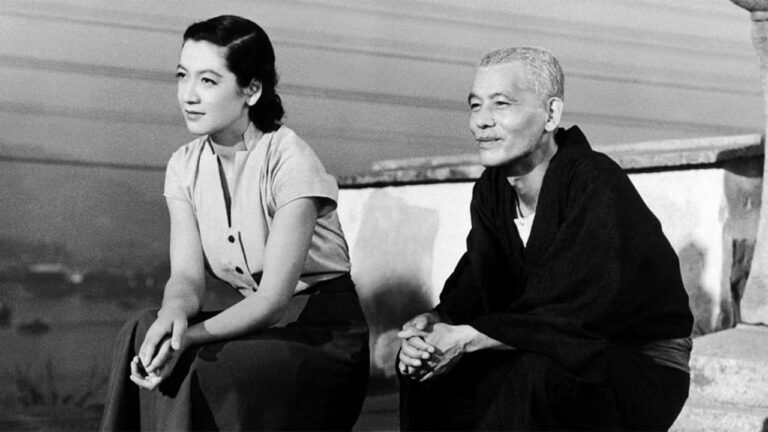
Released in 1953, Tokyo Story continues to stand as a needs-delivering study of family, time, and emotional distance in a way that has never been bettered on screen. This great film of Tokyo is directed by Yasujirō Ozu; in the film, the Hirayama family is introduced as an aging couple who travel from the port of Onomichi to Tokyo to stay with their children when they are in the city. This film’s impact continues to build to the present day, which saw it declared one of the greatest films of all time in the 2012 Sight & Sound directors’ poll.
A story of family without sentimentality
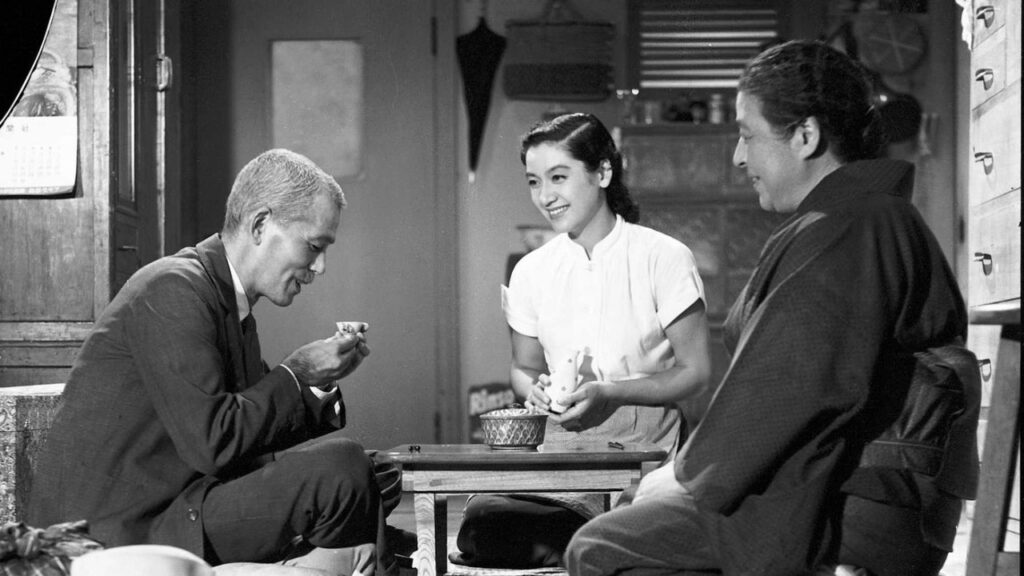
It is under these circumstances and under this polyvocal narrative structure that the conflict between generations remains a pivotal aspect of Tokyo Story. The children of Shūkichi and Tomi are not mean or ill-tempered toward their parents but are simply busy and preoccupied. The children have a medical practice in a medical clinic and a hair salon business in a hair salon, and because of this busy schedule, they pack their parents off to a loud hot spring resort, and into this picture comes Noriko.
Ozu recounts all these aspects without commenting on them. “The children’s neglect,” as David Desser has written, “is portrayed as a consequence of their ‘modern’ environment and not as a sign of their poor character.” When Tomi falls ill and eventually passes away, there is neither grief nor consolation; all reactions stay within their limits and remain purely formalistic.
Loss, acceptance, and the passage of time
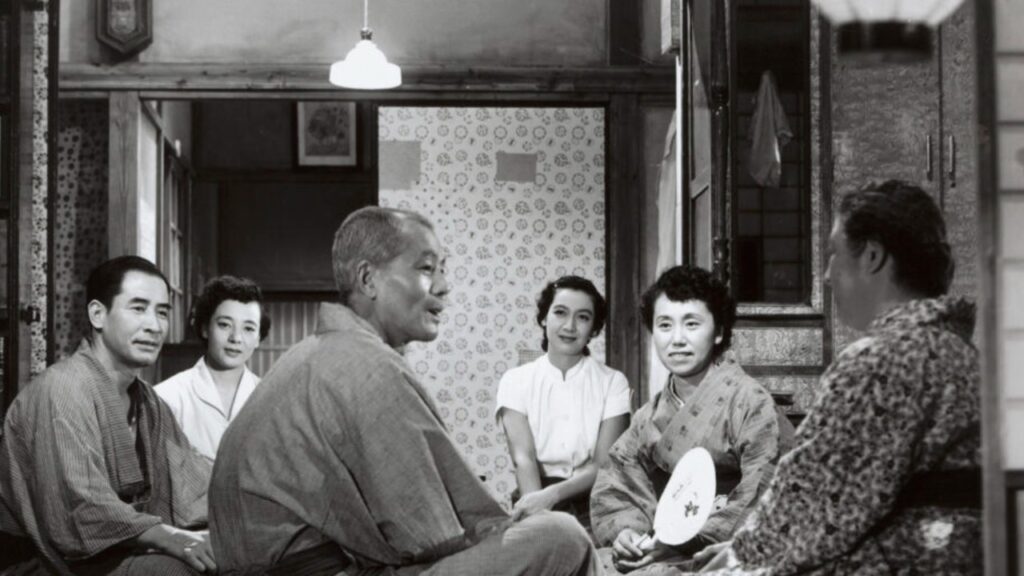
However, the third act is so devastating because the film eschews the spectacular. After the funeral for Tomi, the children soon get on with their lives, leaving Shūkichi alone. Kyōko, the youngest of the children and one of the most outspoken about the farm and the family’s plight, laments the selfishness of the children. Noriko presents a contrasting view. She sees the space between children and their parents as inevitable. It is the product of the passage of time.
The concluding dialogue between Shūkichi and Noriko encapsulates themes expressed in this film. Shūkichi thanks Noriko for being kinder than his own children and hands her Tomi’s watch. Noriko’s sorrow is subjective, subtle, and left unanswered. Shūkichi’s acceptance of loneliness is not imparted as tragic but as the inevitable progression of life. At first, it was considered too Japanese and thus incongruous internationally.
However, it received recognition in London and in New York years later. Its reputation did not wane but, in fact, grew stronger with time. Ozu’s cinema came to redefine the way realists handle their craft by its lack of camera movement and interest in the trivial. The virtue of Tokyo Story lies in its refusal to move its viewers but rather to observe them as they are.