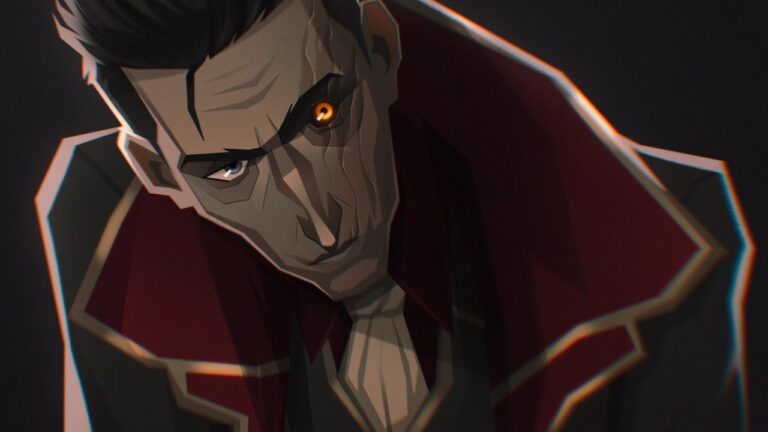
Silco is one of the most complex characters in ‘Arcane,’ the Netflix series which explores the prequel history of the League of Legends universe. Silco could be conceptualized as the primary antagonist of season one, the Zaunite crime boss whose antics lead to mayhem in the undercity. Nonetheless, having observed his narrative arc unfold before us, one could easily discern that Silco is more than the villainous adversary. Silco is a man whose narrative centers upon his trauma and ambition, which are personified through his vision for Zaun and his conflicted love for the girl who would come to be known as Jinx.
Silco’s World Revolves Around Building Zaun, Shaping Jinx, and Blurring Morality
To properly understand Silco, we need to look at his background. Silco was “brothers-in-arms” with Vander, and they had the same aim of freeing Zaun from under Piltover. They believed that the undercity needed to be freed. But their revolution turned out to be too violent. Vander could no longer continue, and as a last resort, he tried to drown Silco.
However, as the episode unfolds, we see that Silco had actually lived through the experience and that the experience has marked his face and his heart. This is important in the episode because it shows that Silco has the motivation of both idealism and a sense of personal betrayal. This is not to say that Silco is necessarily a bad guy; he has actually been wronged in his own right and feels that Zaun has been wronged as well.
How Silco’s Ideology Defines Him
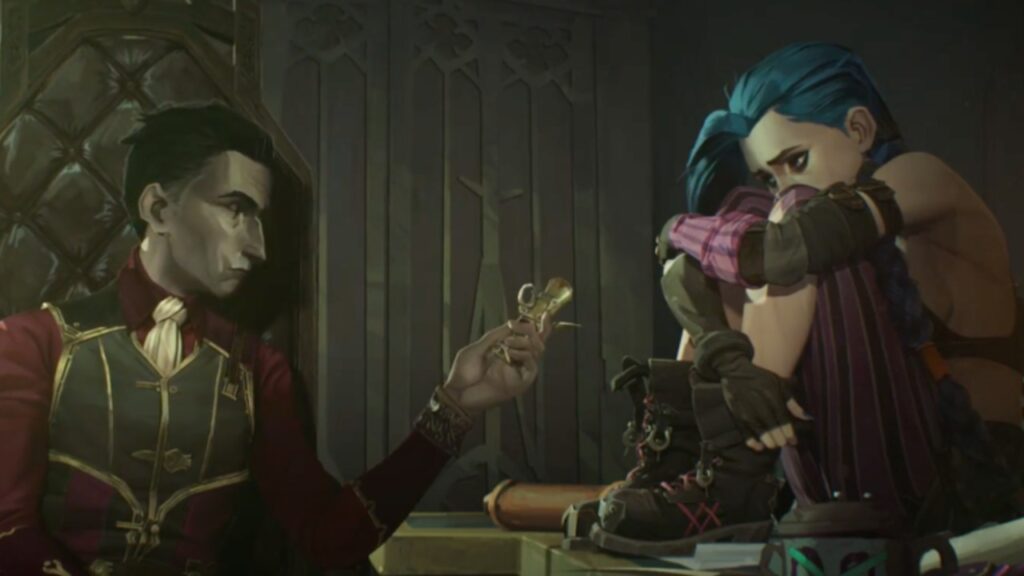
Years later, Silco emerges in Zaun and starts building his crime syndicate. He is a dealer in Shimmer, which makes him rich enough to wield significant power in Zaun. Silco wields significant power in Zaun by proxy, ruling the streets of Zaun through his crime syndicate. He keeps law and order in an area where living means sacrificing one’s morals. Silco, although having immoral motives, has only one goal in mind: Zaunite independence. Silco tells us, through his character, that morality and immorality are not always what they seem. Silco is a character who exists in the gray areas of morality, and it is up to us to judge whether the ends justify the means. The relationship between Silco and Powder, who later becomes Jinx, is another complexity found in the character of Silco. After the death of Vander, Silco adopts Powder as an orphan who is grieving for the loss of her family. He eventually becomes a parental figure. His love is abnormal, but he loves her with real intentions. He is fostering her talents while also taking advantage of her grief to mould her into a new character. What we see is a man who has the potential for care and devotion, but also has the idea that he must transform Powder into Jinx in order for her to survive and for his idea of Zaun to be fulfilled. This is the poisonous form of paternal love that embodies Silco as a character. It makes him human, but it also gives him a tragic end. Silco’s ideology is what propels him forward. He is a complete believer in his ideology. He thinks of himself as a liberator, as someone who fights for the liberation of Zaun, and he will do whatever it takes to make this happen. This is what makes him charismatic, gives him a certain quality that makes us, the audience, look beyond him to the fact that he is far more than the bad guy in the story. His complexity challenges us to consider leadership, to consider loyalty, and to understand how trauma can inform decision-making choices. Even as we continue to despise his actions, we are able to understand why he makes certain choices. As the Season 1 comes to a close, Silco’s story comes to a close as he is accidentally shot by Jinx during a psychotic break. Even in death, Silco continues to comfort Jinx as he tells her that she would always be protected and that she is perfect. His death is significant because it is the culmination of Jinx’s transformation and also leaves Zaun without a leader and allows for the war between Piltover and Zaun to continue. The effects of Silco do not stop with the power that he held, but with the choices that he made and the person that he inspired.