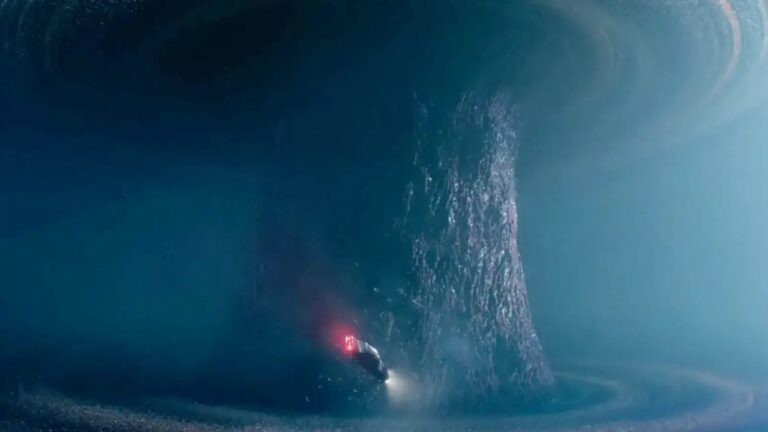
Stranger Things has been conditioning viewers on the notion of the Upside Down as the ultimate other for nearly a decade—this dark reflection of Hawkins with monsters and decayed reality. Season 5 Volume 2 quietly subverts this notion. What the latter half of the show deems the final stretch of the narrative reduces the significance of the Upside Down in favor of a terrifying revelation: it isn’t a world—it’s a structure. A buffer zone. A rip in reality that has been mistaken about its relevance from the start.
This information is revealed incrementally through environmental clues rather than narration. The fact that Nancy and Jonathan notice the electrically fringed edges of the Upside Down’s sky implies turmoil, as if the world is stretched to the limit. At about the same moment, Dustin finds Brenner’s journals, in which the Upside Down is transformed into a scientific concept. As far as Brenner’s theories go, the Upside Down is a wormhole that remains in stable equilibrium due to exotic matter—a hypothesized substance that, in theory, could maintain warps in space-time. It’s an ominous message: the Upside Down is not because it’s supposed to be but because it must.
The Upside Down as a ‘Containment Zone’
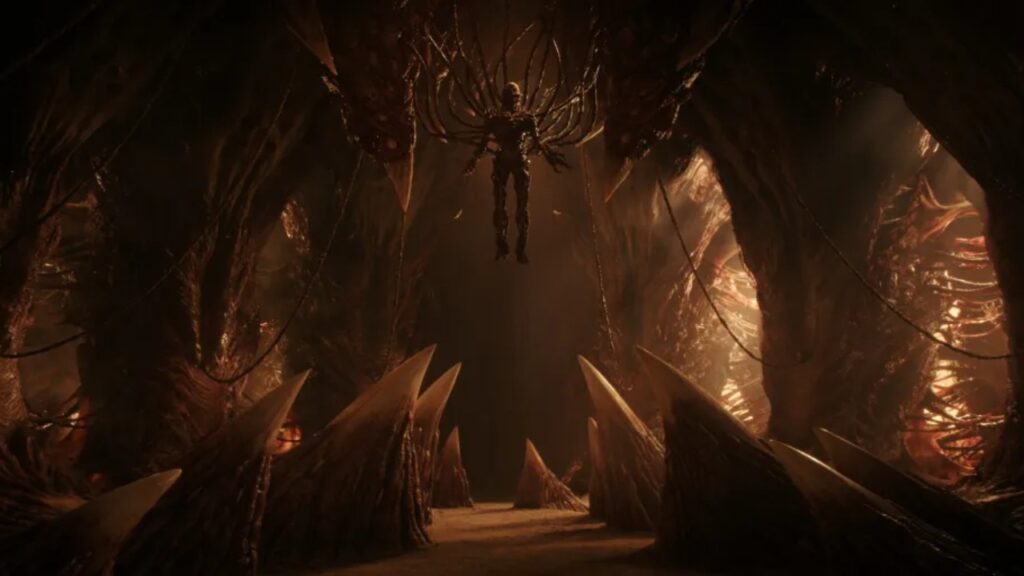
Season 5 establishes that the Upside Down never existed as the point of origin for the terrifying events that have been playing out throughout the series. Instead, the Upside Down is merely a membrane, or a regulated pocket of space-time that exists between the Earth and something ancient and far more aggressive, which has been designated as the Abyss, itself revealed to be the same as what fans call ‘Dimension X.’ This is where Henry Creel was also stranded, then, in 1979, when Eleven rejected his beliefs and tore apart the fabric of reality during the battle between the two at Hawkins Lab.
The important part is the timeframe. The Abyss was already there. The Demogorgons were already there. The Mind Flayer was already there. When Eleven mind-linked with the Demogorgon in 1983, she did not make those entities; she made the Upside Down, accidentally creating a gateway for Hawkins to travel to the Abyss. What Brenner and the military did was strengthen this gateway by installing exotic matter barriers, turning the Upside Down into a controlled sector instead of a hole in reality.
Thus, all those visual anomalies have valid explanations. “Ground” in the Upside Down is somehow linked horizontally to Hawkins, while “ceiling” opens up into a huge void. The Upside Down is not a destination but a corridor.
Vecna, The Abyss, and the illusion of control
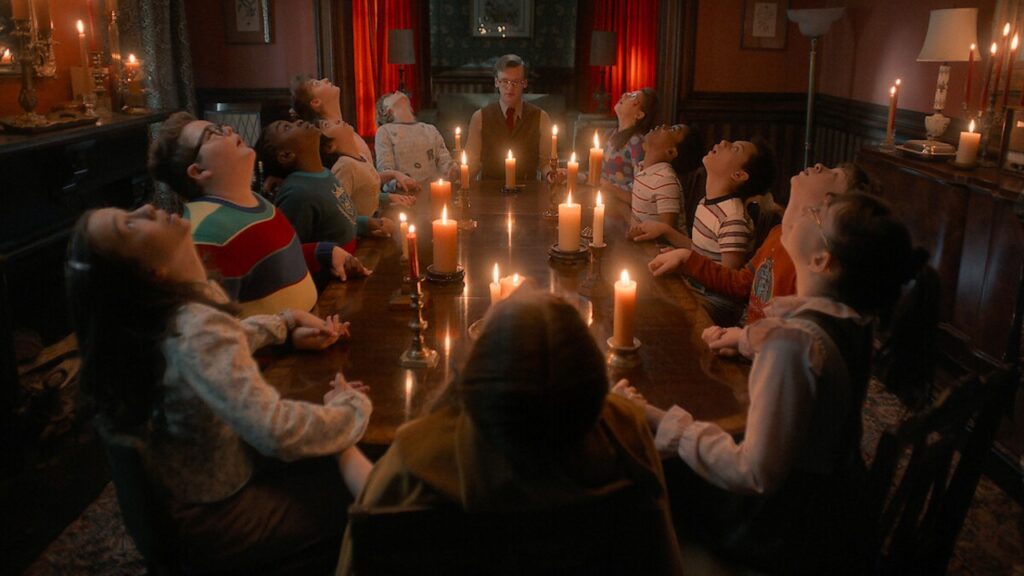
Coming from having been influenced by the Mind Flayer in the Abyss, Henry Creel knew what the Upside Down was and wasn’t—it wasn’t a prison he wanted to escape from; it was an armory. He didn’t cross directly into Hawkins; he used his tools of infrastructure—sending vines, creatures, and mental invasion through a space that would facilitate an invasion. The Upside Down was his foothold—a territory he engineered so an invasion could be achieved from this midway point.
Moreover, this helps to settle any confusion regarding Will Byers. Even if there had been a resemblance between the dimensions, Will certainly did not reside in the Abyss. Byers is saved in Season 1 via tunnels rather than portals between dimensions. The hellish landscape with the towers is definitely outside the membrane.
Season 5, Vol. 2 does not make the argument that every mystery can be relegated precisely to its rightful spot in the puzzle and that there are no holes that remain unfilled. But the larger logic now becomes apparent. Upside Down was never the destination. It was a solution—and a temporary one at that.
Related Posts
- ‘Stranger Things season 5 volume 2’ sets the stage for major deaths for the finale
- ‘Stranger Things’ Season 5 Volume 1 Ending Explained: What Exactly Happens to Will?
- The reason Will Byers from ‘Stranger Things’ matters more than ever finally comes into focus