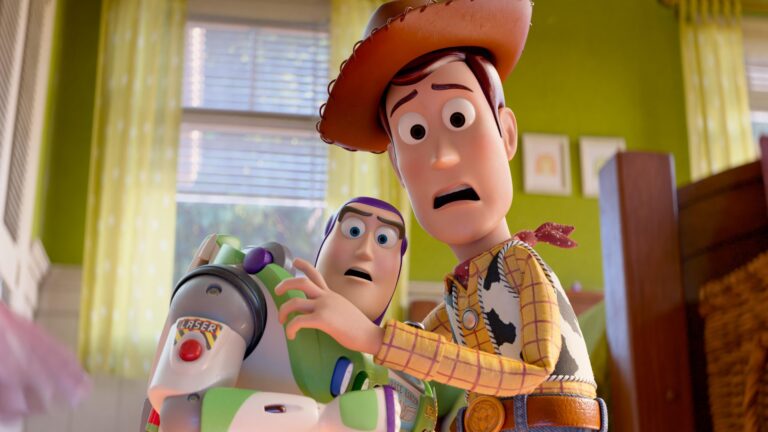
As the four-decade milestone of the first release of Toy Story approaches, the official word from the Creative Director of Franchise at Pixar, Jay Ward, has been unequivocally clear on the role of generative AI in the production of its animated features: it does not use it.
Speaking in the UK as part of a 40th-anniversary celebration tour of the Pixar Animation Studios, Ward described the current AI environment as “the Wild West.” While acknowledging the significant advances in computer power and the fact that, increasingly, AI could potentially trick the viewer into thinking they are seeing something new, Ward reiterated that, in fact, they do not use generative AI in the production of its features.
Pixar confirms no generative AI use
Speaking with Verity Wires, the creative director at Pixar, Jay Ward said, “We don’t use generative AI at Pixar, and we’re still figuring out how we will use AI—it’s still the Wild West. But now computing power is so strong, and the generative AI pulls from the internet is so good that people are being fooled. I don’t think AI will replace filmmaking because, at the end of the day, it’s regurgitative; AI is not creating a story. It’s mixing around a mixing bowl of things that’s found on the table.”
Adding to it, he continued, “We haven’t considered remastering or rereleasing our films with AI, maybe because they’re classics at this point and there’s a charm to that. The question is, if you remaster one, does it mess with people’s minds because they’re remembered a certain way? We could have a remastered version with updated rendering and lighting. It would be amazing, and AI could help with that in the future. But nobody’s asked for it yet!”
The philosophical approach taken by Ward in making this case centers on the fact that, in his opinion, generative AI is, in fact, “regurgitative,” meaning that it does not, in fact, offer anything new in the way of storytelling, but instead combines elements that already exist in a new way. This, in turn, raises interesting questions for a production company whose output, from Monsters, Inc. through Finding Nemo and Inside Out 2, has long been associated with emotionally driven storytelling.
Of course, this does not mean that Ward was against AI altogether. He went on to speculate that future AI projects might be useful for remastering old movies to improve their lighting effects or similar upgrades. Nevertheless, he also posed a significant point: what if remastered versions of classic movies end up altering the viewer’s perception of them? For instance, the appeal of the early CGI effects seen in Toy Story was partly because it was part of history. If it were to be remastered, there might be a disconnect between what the viewer remembers and what actually exists.
It should be noted that this comes at a time when Pixar is gearing up for Toy Story 5, which will be made by Andrew Stanton and star the same voices as the previous installments: Tim Allen and Tom Hanks. Clearly, the studio is relying on its existing franchises but also wants to revive the excitement for cinema following the streaming shift.
Ward’s comments are simply a reflection of Pixar’s overall artistic policy. A studio that survived near-catastrophic events, like the time when Toy Story 2 was deleted by accident and went from the computer section of George Lucas, has made a name for itself by emphasizing the importance of storytelling. For now, Pixar’s message remains: AI may be worth emulating, but it remains far from replacing the imagination at the heart of their stories.