
The Oscar plea of Hungary is out, and to be fair, it is not a surprise in the least. László Nemes’s ‘Orphan’ is going official as Hungary’s contender for Best International Feature Film at the 98th Academy Awards, and if you have been following Nemes from his triumphing debut at Cannes back in 2015 with ‘Son of Saul’ (the one that annihilated Cannes and eventually claimed the Oscar), then you would know that the guy never exactly treats you with any semblance of ‘light viewing’ material. And Orphan, which marks Nemes’s third feature after ‘Sunset,’ proves that he still has the magic.
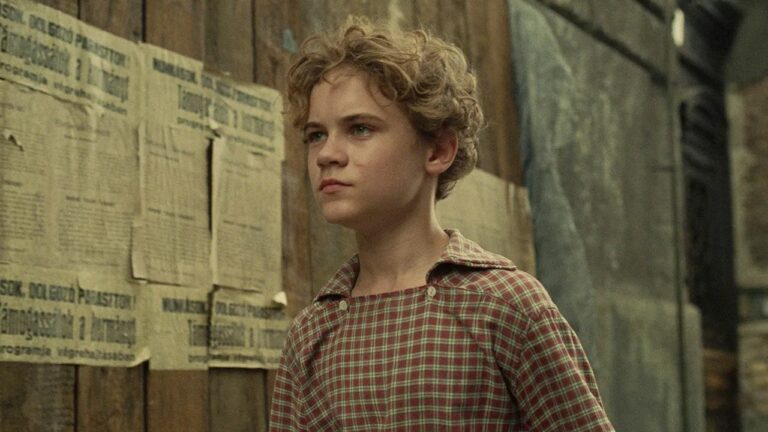
Right from the beginning, in its premier show in Venice’s competition section, Orphan is a film that stands out amongst the crowd of critics and journalists. It’s a story about a young Jewish boy named Andor, who is living with his mother, holding on to hope that his father will come back to him from the camps one day. Every bedtime story, every ritual in their small apartment in Budapest seems to be drawing out that very hope. But Nemes being Nemes, he doesn’t give us a chance to linger in that state of suspended hope for too long.
Nemes and Royer’s Brutal Precision in Storytelling
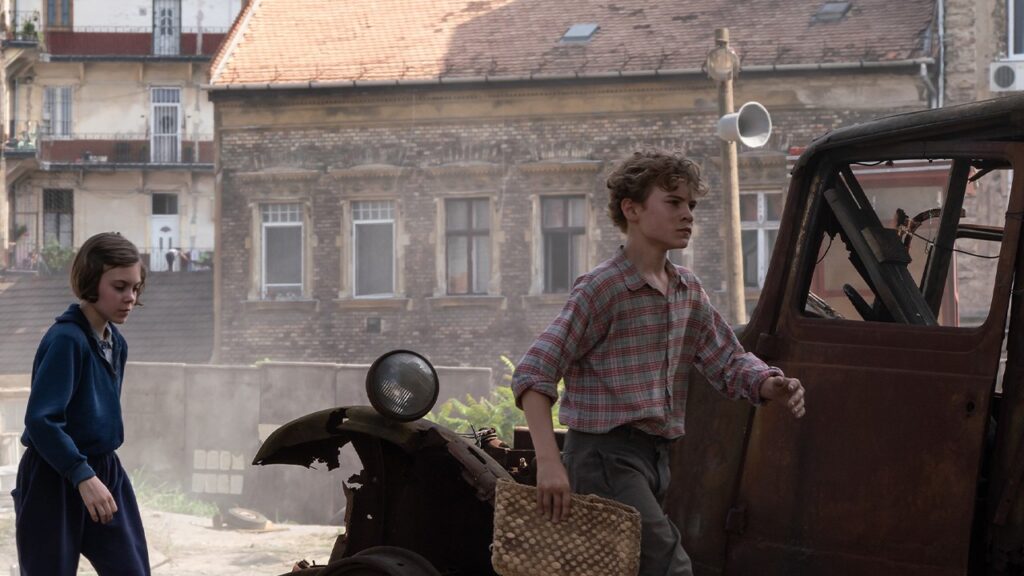
The film takes a sharp turn as soon as the stranger appears at their doorstep. He is very rough, intimidating, and full of misrepresentation about Andor’s father. For a moment, you feel he might be the one who could bring some closure to their lives. However, he ends up shattering the illusion that Andor’s mother has been nurturing within herself all this while. As soon as this happens, the film becomes a story of the disintegration of a family, its strong belief in faith, and a child’s last vestiges of innocence.
What hurts the most is that Nemes doesn’t only convey loss as a moment. The film passes through time, as he underlined with the film being a process – after all, the pain of waiting is in itself a kind of prison. Andor not only loses his father. He loses the time he spent waiting and hoping. In the end, we finally get to see what really happened to his father, and Andor finds himself looking into a chasm that is so wide that you can feel the air being sucked out of the room. It’s really, really brutal.
If you’ve already seen Son of Saul, you might remember how intensely claustrophobic this movie felt because the camera was literally stuck to the shoulder of the protagonist. Orphan, on the other hand, has a different style, but it still manages to put you inside the box. Mátyás Erdély, the cinematographer who’s essentially Nemes’ partner-in-crime at this point, opts for a flat, almost exhausted palette shot on 35mm film using a retro bleach bypass process. The effect is one that appears to have been bleached of happiness because every image feels both cinematic and devastatingly real, as if paging through photos that history almost forbade us from ever seeing.
The locations of the movie Orphan, shot almost entirely in Budapest, are definitely chilling. But there is one scene in a semi-ruined synagogue where young Andor walks amidst dust and overturned benches. The camera turns around him, and you sense that he is being watched by spirits. Nemes does not require any special effects or drama. Just a kid in a devastated space, and your heart constricts.
A Cinema That Refuses to Be Forgotten, No Matter the Outcome
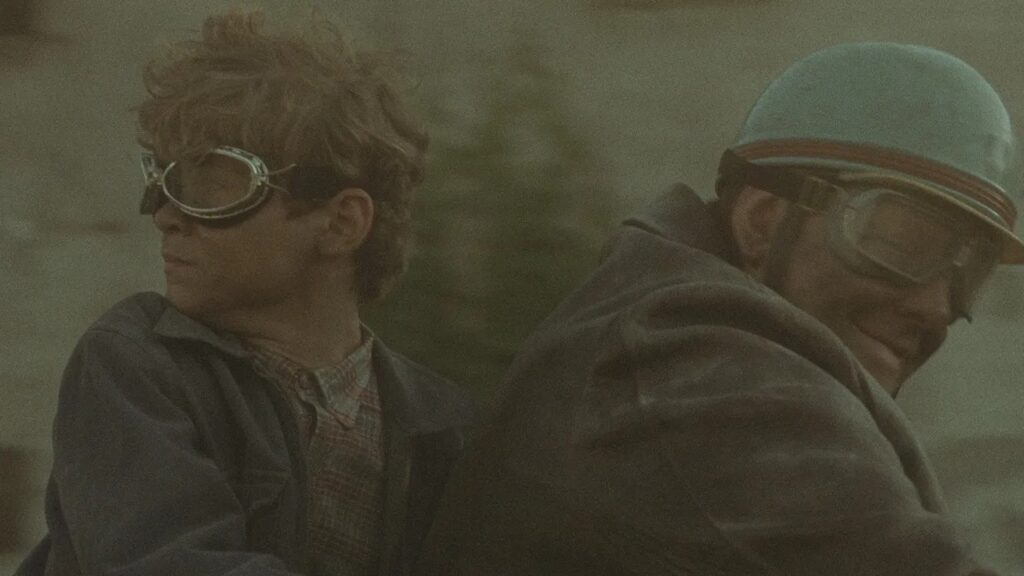
The script is a collaboration between Nemes and Clara Royer (who also worked on Son of Saul and Sunset), and it is obvious that they are a formidable team. The dialogue here is minimal but every word seems to have an extra weight to it. And when Andor’s mother tells him, “Your father will return,” it is clear that she is not just delusional, but she is pleading with the universe for her husband to come back.
The shoot itself was brimming with production companies such as Pioneer Pictures in Hungary, partnered with Good Chaos in the UK, AR Content, Mid March Media, and a host of European financiers. It’s even evident in the minutest detail. Notice the lived-in Budapest apartment? The charming outdoor settings created at NFI Studios’s new backlot. However, the brilliance is in how all this grandeur somehow is distilled into something so endearingly intimate. As per critics and variety, Orphan is no easy watch. It’s a slow, quiet film, and definitely not one that aims to entertain us the way most do. As people who are fans of Nemes’ work in the past, what struck each of us is the way in which Orphan feels both all too familiar and utterly new. It has the same crushing weight of emotion as Son of Saul, but rather than the immediacy of the camps, it explores the silence that follows, the waiting, the not knowing, and the quiet lies that are told in an attempt to survive. The selection of this film by Hungary for the Oscars is more than a mere award calculation. It is about highlighting a story that remains relevant. A story that reminds us, through its endurance, of the fragility of hope. Whether Orphan will reach the top of the Oscar podium or not is beside the point; what is certain, however, is that Nemes has once again created a film that refuses to be overlooked.