
Note: The article below contains spoilers of ‘Chad Powers first episode.’
The comedy series ‘Chad Powers,’ which was released in September 2025, brings an interesting and humorous perspective to the topic of the life after fame in American Football. The series is based on a viral ESPN sketch, featuring former NFL quarterback Eli Manning, who conducted an open tryout for Penn State with the disguise of a different identity. Eli Manning wore a wig, a mustache, and jersey number #200, talking with the voice of a young quarterback.
This sketch has been the focus of attention for the whole country and is the most significant point of reference for this series. The series also features Glenn Powell as Russ Holliday, a disgraced quarterback, who can be considered as the alter ego of Manning. Russ Holliday is also referred to as Chad Powers, who wears the same mask and speaks in the same over-the-top voice, which signifies his return to the game of football.
Glenn Powell’s Chad Powers Explores the Fragility of Fame and the Weight of Public Mistakes in American Football
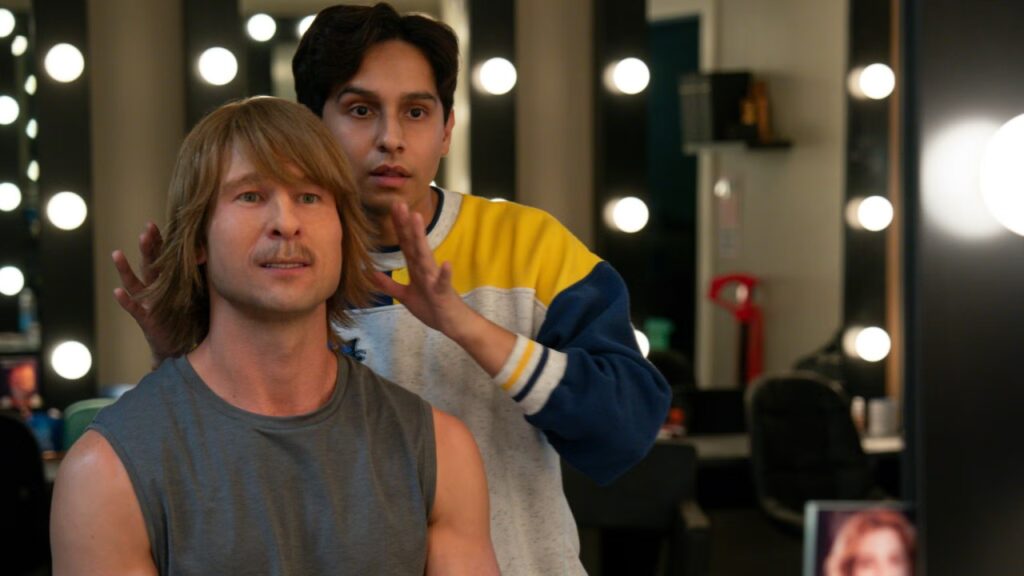
The first episode of the series, which spans 3 minutes, begins with a flashback perspective of the era of Holliday as the quarterback of the Oregon Ducks. In a match against Georgia in the Rose Bowl, Holliday was about to score a touchdown when he fumbled the ball. This single error had resulted in the Oregon team forfeiting what would have otherwise been an extremely unexpected victory. The suspense stemming from this situation is elevated by the direct involvement and stakes of Holliday. Following the fumble, Holliday is seen having a public meltdown in which he punches the father of a cancer patient. It should be noted that the punch was so effective that the father ended up atop his son’s wheelchair, as a result of which he and his son get onto the field. This act of shocking but thoroughly poor performance occurs on a nationwide platform. He is no longer considered a talented quarterback with genius-level abilities. Rather, he is now the subject of ridicule. His career is over, and his reputation is lost. Eight years pass by as a result of this traumatic performance, following which Holliday re-emerges with a different identity as the quarterback for the fictional South Georgia Catfish. The series investigates these circumstances as a way of understanding the challenges and rewards inherent in the process of reinventing oneself. We witness how Holliday deals with life in the world of minor league football, which is a different world but one that is very much similar to the one he was before. Another character, Chad Powers, gives him the chance to interact with other characters, coaches, and fans in a way that he could not possibly do so as Holliday. These situations are explored by the series in a comedic manner but also in one that allows the viewer to think about the fleeting nature of fame and the consequences of failure within the public eye. The performance of Glenn Powell concerning both Holliday and Powers becomes the impetus for the success of this series. We watch him move from a disgruntled former quarterback that is haunted by memories of his past to a caricature of a character that briefly hides him away from the spotlight.
Glenn Powell’s Duality Highlights the Stories of Athletes Overshadowed by Stardom
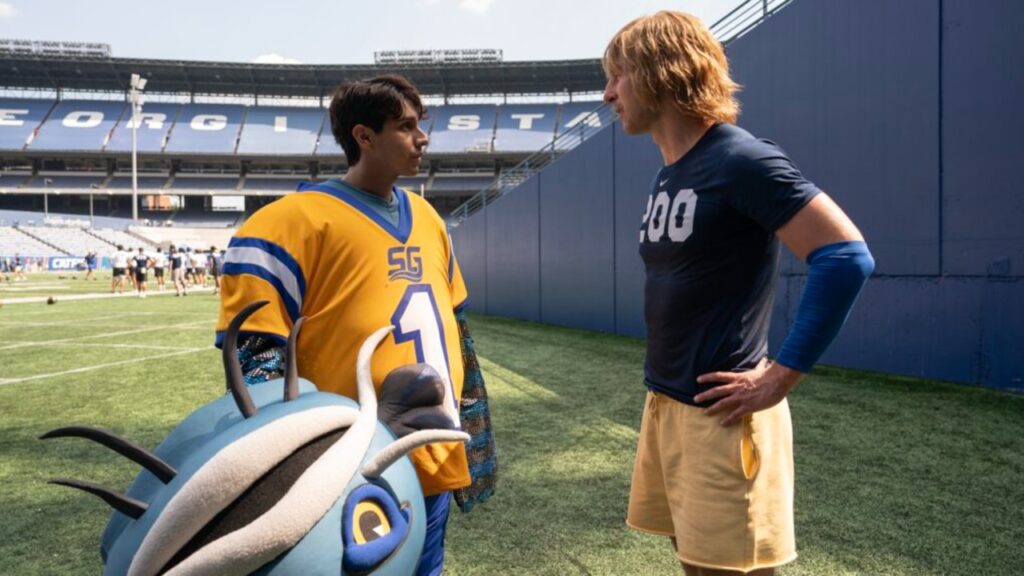
This series is a recognition of the original Eli Manning sketch not only for its comedic value but also as a prism through which the series views the struggle between identity, performance, and perception. It further emphasizes the recognition that athletes, no matter how talented, are reduced to definitions of their worst experiences and not necessarily their best. We observe how Holliday comes to learn that fame, at the end of it all, is temporary and that a mistake can have long-term ramifications. The series also refers to the culture that exists because of professional sports. The South Georgia Catfish, as a fictional team, becomes a backdrop where rules, pride, and the peculiarity of minor league football offer up circumstances that are sometimes funnier than hurtful. Nonetheless, the series does not act as an apologist for Holliday’s actions. Rather, it situates the action in a complex way that allows the viewer to consider the implications of fame, responsibility, and second chances. The series asks the viewer to look at the horizon and spot the humor in the circumstance presented before them. It also challenges them to consider the implications of public acts and private errors. The development of the character of Holliday is still a process that is occurring and will continue throughout the series. This is how he tries to restore respect and redeem himself, but this series, going by the first four episodes available on Hulu, does not provide a clean resolution. Rather, it is left up to the viewer to ponder the questions of reinvention and the conflict between public and private persona. After all, this series that is being provided here is far more than one concerning a football player and a viral sketch bit. Rather, it is something that allows the viewer to examine and interpret the characters involved.