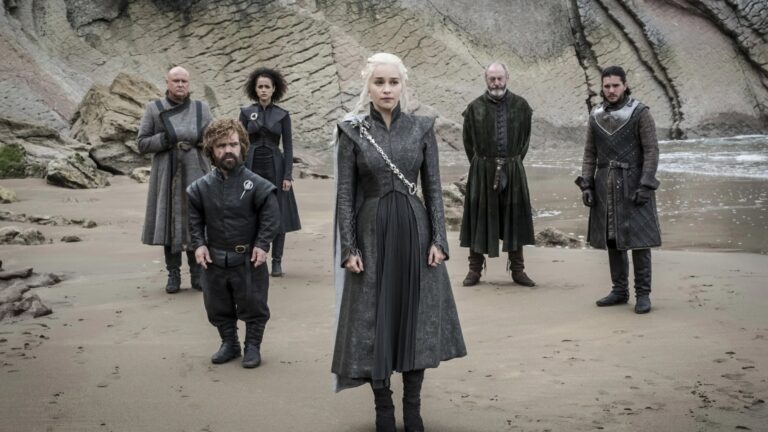
The impact of having the adaptation of Game of Thrones succeed, stories written by George R.R. Martin in book form, having such significant repercussions in the television sector, is immense. The last few seasons of HBO’s flagship series, which had to move forward without having the entire source available, can now serve as a case study of what might occur if it gets too far ahead of itself in terms of writing. Martin, in his adaptation of A Knight of the Seven Kingdoms, seems to have learned this lesson.
“Even though we don’t have the ins and outs of every story, we know canonically the major beats of Dunk and Egg throughout their lives. So we wouldn’t necessarily run into the same trouble as the flagship did. And George has outlined 12 more of these stories that he’s shared with me. These stories take them all the way through their lives.”
In an effort to make this spin-off series of Thrones more story-connected, Martin has provided series writer Ira Parker with something that has been lacking all along for the staff of Thrones: an ongoing map of their world. Martin has allegedly provided series writer Ira Parker with an outline of 12 unwritten novels of Dunk and Egg, which encompass the entire life of Ser Duncan the Tall and Egg.
A course correction for Westeros
Currently, Martin has only announced three of his Dunk and Egg stories: The Hedge Knight, The Sworn Sword, and The Mystery Knight. These are the pieces of the puzzle that comprise the first few seasons of the show. But whereas Game of Thrones, which is currently airing, is finding itself running low on source material in the midst of its show, A Knight of the Seven Kingdoms is in a far better place with respect to its source material.
The new information offered by Martin varies in terms of scope and level of detail. While some of the outlines are no more than summaries, others are highly detailed storyboards with a clear message to convey on an emotional level. Taken as individual examples, they reflect the progression of Dunk and Egg from being nomadic adventurers to being the key figures they will eventually become in the history of Westeros, perhaps even in the Tragedy of Summerhall.
“Some of these are just a paragraph, but they give you a sense of where they’re going to go and the people who come back in and out of the story.”
While foresight is one aspect, there is also a difference when it comes to intentionality. The end result is already set when the story is not entirely written, either. This is why the series has been able to plant successful seeds, as Game of Thrones could not do once it passed the book series.
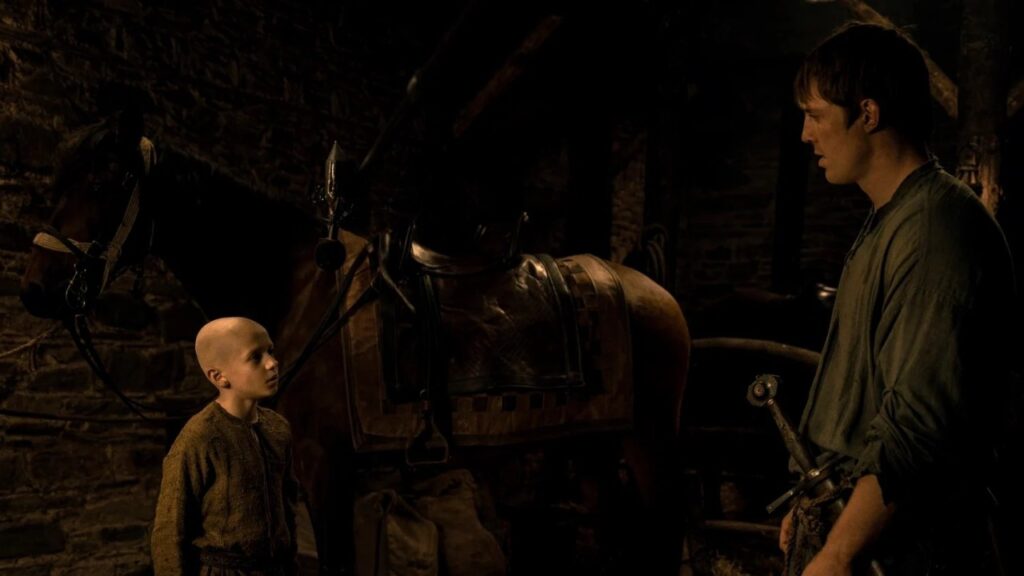
Martin has been very forthcoming about his dislike of the Game of Thrones series finale, and this has been especially true now that it has surpassed the book series. The original Game of Thrones game show hosts had a basic plan for the series finale, but it was rushed because of the missing connecting pieces. But Parker is being very careful with his wording, and it is evident that A Knight of the Seven Kingdoms is not being written ‘blind.’ Even if they are not writing out the full stories, it is evident that they have knowledge of what is coming through in terms of who will live and who will die. Notwithstanding this, unlike its predecessors, A Knight of the Seven Kingdoms is a far more measured endeavor when it comes to scope.
There are no dragons on the horizon, nor any battles or apocalyptic events threatening to overwhelm each and every episode. To begin with, there are a mere six episodes overall for this series’ first year alone, many of which are less than 40 minutes long. That is evident in terms of budget allocations for this series overall. With a budget for each episode ranging from a mere $10-15 million—a fraction of House of the Dragon’s budget at $20 million—the series is one that focuses more on character development, acting, and atmosphere over anything else. According to Parker, Seasons to come won’t feature a much larger scope either. Indeed, Season 2, based on The Sworn Sword, might feature an even smaller scope than this one, as this story is set against the backdrop of a drought.
The approach Ira Parker has undertaken when dealing with this series is one marked by respect and deference. Having already had experience working on House of the Dragon and also working on “Better Things,” Ira Parker is well aware of what constitutes prestige television—and also well aware of when one is not necessarily going for such either. Martin has also been very hands-on when it came to this series overall. He has read each and every one of the episode’s scripts.
He has shared his thoughts about them. He has disagreed with certain choices when he did not want them to happen either. His approach when working with Showtime is very upfront, very contentious, and very productive, too. Thus, when it comes to this particular adaptation overall, this is one that is very Martin. One who prefers waiting over rushing and character over calamity and payoff over surprise, too. Indeed, after this many years now having watched Westeros go up in flames for the sheer shock value alone, one is long overdue for something far more low-key and possibly better too.