A Knight of the Seven Kingdoms kicks off not with flames, prophecies, or disasters of state but rather a grave. The decision is a profoundly subversive statement for a brand that has come to represent the explosive and the barbarous. In the first installment of the series, The Hedge Knight, the world of Westeros has shrunk, grown more gentle, and become more human, and perhaps the most revolutionary element of the series is its scope. Based on George R. R. Martin‘s Tales of Dunk and Egg stories, A Knight of the Seven Kingdoms upends the Game of Thrones universe in favor of a more humanistic focus.
Taking place, by and large, a hundred years prior to the events of Game of Thrones, this series sees Ser Duncan the Tall, or Dunk to his friends, as he is better known, as a hedge knight with no lands, no lineage, and no one to vouch for his knightly status, except for his dead master.
It is quite apparent from the start of this episode that this is not going to be a show about power, but rather one that will revolve around survival and, perhaps, to an extent, notions of identity and morality.
The Hedge Knight begins, just like Martin’s original tale, with Dunk burying Ser Arlan of Pennytree in the rain. Peter Claffey’s acting kicks off the episode, and his character’s sense of grief, confusion, and obligation are palpable. The monologue by Dunk, taken from his thoughts in the novella, establishes the tone for the entire series. The monologue is sincere, awkward, and even humorous, managing to combine humor and pathos without diminishing one for the sake of the other.
This is what makes the episode. Dunk has conversations with his horses, envisions other futures, and weighs the decision to walk away from knighthood altogether. Such scenes make him human, something that very few characters in Westeros have been allowed to be. He is not special for reasons of prophecy or lineage. He is special because he doesn’t give up.
A different kind of Westeros
This is a comedic style that is down-to-earth rather than irony-based, and its most deliberately crass moment—Dunk relieving himself behind a tree—is as much a declaration of purpose as it is a shock tactic. This is a series that is interested in physical fact, embarrassment, and exposure. This is a knighthood that is anything but glamorous. It is awkward, isolating, and often humbling.
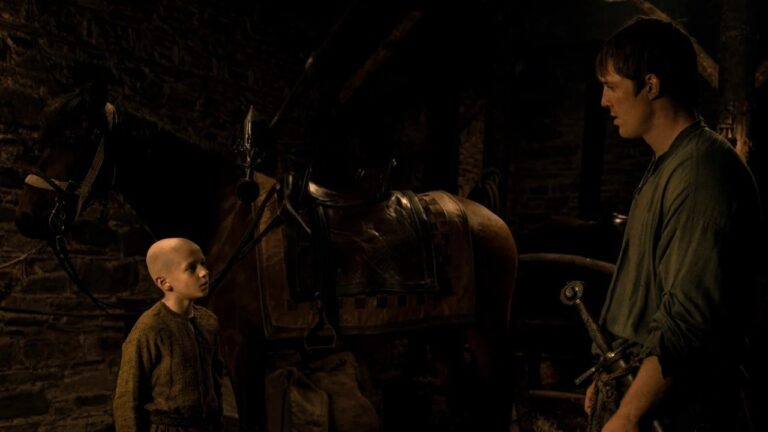
The emotional center of the episode begins to cohere when Dunk meets Egg, a clever-tongued, bald-headed boy who is acted with considerable confidence by Dexter Sol Ansell. The initial encounter between the two at a roadside inn is already imbued with a dynamic of resistance and curiosity. Dunk has no use for a squire; Egg is utterly fascinated with Dunk.
Egg and Dunk’s first encounters are playful but purposeful. There’s a good contrast between the audacity of Egg’s character and the self-doubt of Dunk’s. It’s a smart move to let the relationship between these characters develop through small details rather than big statements. A moment of thievery involving a warhorse, a common annoyance, and a presence that lingers—this is what makes their eventual bonding together believable.
The inn sequence also marks the introduction of one of the more intriguing plot threads in the episode, that of the drunk man with the Targaryen coin who seems intent on avoiding recognition. The show shows remarkable self-control in resisting the temptation to resolve this mystery right away, leaving it up to the viewers, especially the book readers, to puzzle over it in the meantime. It’s a welcome departure for a series that’s otherwise notorious for its tendency to info-dump.
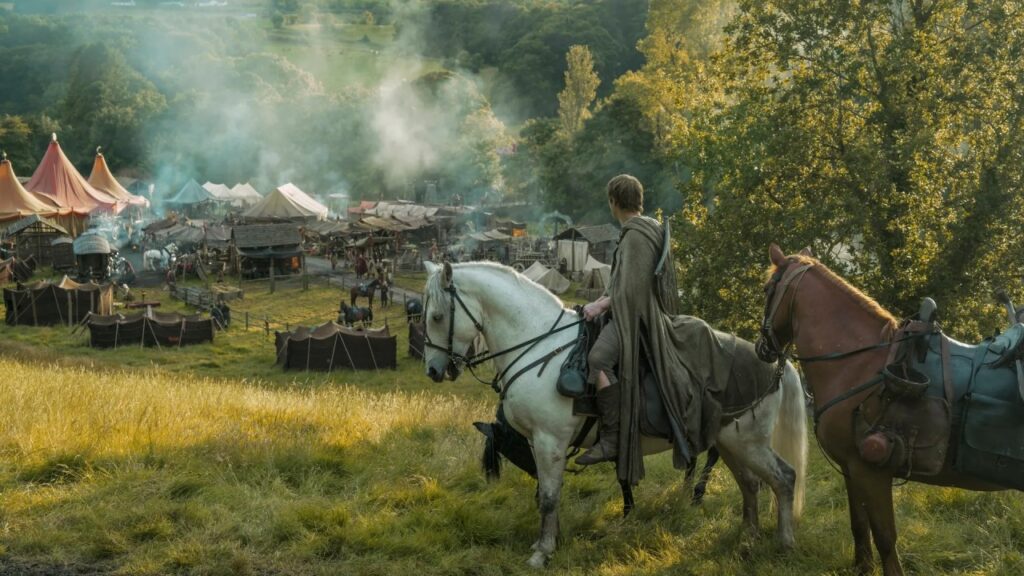
Once Dunk arrives in Ashford Meadow, the aesthetic philosophy of the episode is made fully explicit. The tournament grounds have the feeling of being lived in, of having been constructed in such a way as to emphasize experience over spectacle. Clothing is detailed but worn, flags are bright but flawed, and every inch of the camp is filled with people whose lives extend outside the boundaries of the shot.
The lack of Ramin Djawadi’s signature Game of Thrones theme is apparent—and welcome. Music by Dan Romer is softer, more thematic, and less pulsing, underscoring the show’s tonal shift from its forebears. In tandem with the choice not to have the opening title card, the show makes it clear it has no interest in nostalgia for its own sake.
This is where Ashford reveals the conflict at the heart of Dunk’s storyline: without witnesses to witness him being knighted, he is barred from competition altogether. His search for Ser Manfred Dondarrion, who had fought alongside Ser Arlan’s father in the past, is summarily rejected each time. These scenes highlight the thematic concern with legitimacy throughout this television series. In Westeros, one’s identity is only as legitimate as those who will validate it.
The secondary characters add depth to this theme. Ser Steffon Fossoway is the picture of entitled knighthood, while his cousin Raymun is the alternative. His encounters with Dunk demonstrate the randomness of social class in this appearance-obsessed society.
The most compelling part of this episode is Dunk and his rejection by camp followers, which culminates in a moment of truth and not embarrassment. When Dunk does speak out against the cruelty that he has suffered at their hands, he finds that his reception is not mockery but compassion.
This is a small moment, but what defines Game of Thrones is that sometimes honor does exist within Westeros.
This continues into the second half of the episode, especially with the puppet show and the feast that follows for the Baratheons. The shy puppeteer, Tanselle, shows Dunk some tenderness that has nothing to do with ambition. Lord Lyonel Baratheon, on the other hand, is full of theatrical flair and awareness, representing a type of power that is performative but not tyrannical.
But even in these circumstances, Dunk is acutely aware of his own shortcomings. He is overmatched, overpowered, and simply overlooked.
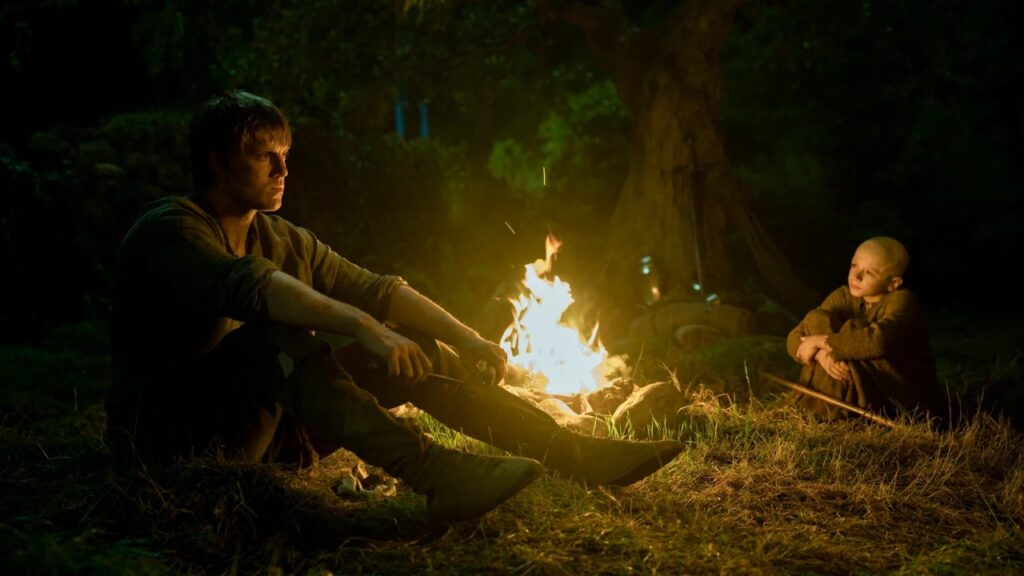
The premiere ends with the most emotional moment in the series: Egg deciding to follow Dunk to Ashford and establish himself as the king’s squire. The action takes place with a sense of quiet intimacy—a washed shirt, prepared food, and a truthful talk under the elm tree. Finally, Egg accepts the offer for reasons of responsibility. The final shot, a shooting star blazing a trail through the sky as Dunk and Egg prepare for the night ahead, is a perfect distillation of the series’s essence. It is optimistic without being overwrought, loaded with meaning without becoming heavy-handed.
For viewers who are aware of the fate that awaits Egg, the scene takes on a whole different level of resonance without ever leaning on that familiarity for its impact. The Hedge Knight’s premiere is a very confident one. It’s a series that never feels the need to reach for the highs of Game of Thrones or the operatic tragedy of House of the Dragon, instead finding a different space in the world of Game of Thrones that’s character-driven and grounded in small stories.