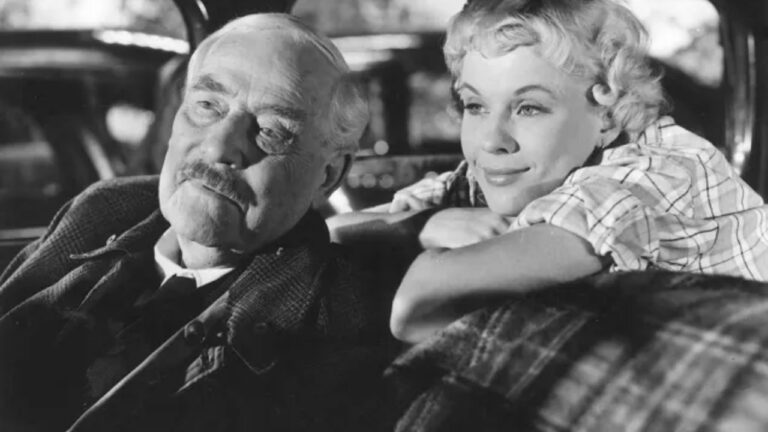
Although released in 1957, Wild Strawberries remains one of the most intimate works of director Ingmar Bergman, “a film that feels less like a typical drama and more like a guided tour through one human soul.” This work was begun by Bergman in the hospital, where he was recovering from an illness, and distills the wisdom of reflection, emotion, and insight into the simple story of a road journey. The Swedish title, Smultronstället, is more than the simple name for strawberries; it suggests an individual, beloved “place in memory.”
Headlined by Victor Sjöström in what proved to be his final performance, “Wild Strawberries” centers upon Professor Isak Borg, an older doctor who, after being invited to Lund to celebrate his 50th anniversary of graduation, sets out from Stockholm to accept an honorary degree. Rather than being a simple journey, this will become a kind of reckoning, as the gruff but deeply isolated Dr. Borg reveals a personality that was immovable until the highway ahead of him helps to change that.
Sjöström delivers a sense of profound seriousness to this role, establishing a character who, rather than being racked by some terrible transgression, struggles in the aftermath of years of emotional starvation. This is not merely an old man, but a deeply sad one, in a genuinely profound
A road trip through memory and regret
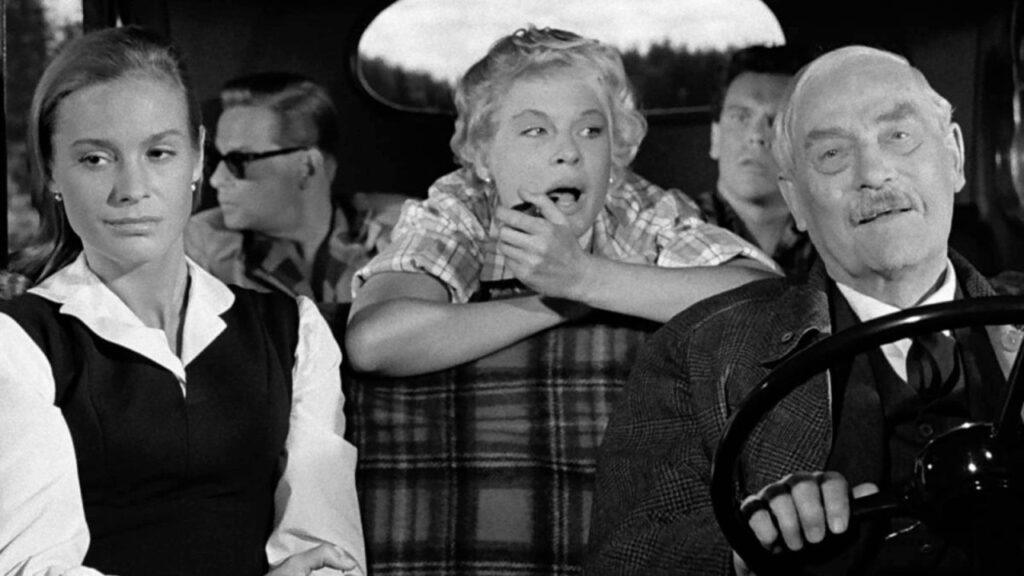
Borg is accompanied by his pregnant daughter-in-law, Marianne, who is struggling through a disintegrating marriage. Strangers become reflections for Borg. He meets hitchhikers and warring couples, and his dreams and reminiscences mingle and confound the linear and the real. Bergman’s shifts between the real and the remembered are fluid and gentle yet catastrophic in their revelations. Borg looks back at his youth and the memory of Sara, his lost love who left him for his brother. He relives the innocence of the summer days when he used to search for wild strawberries near the sea.
Of the movie’s more dramatic sequences involving dreams, perhaps the most revealing pits Borg in an examination room, not suffering the consequences of failure but of emotional inadequacy. “You are guilty of guilt,” he is told. This might be seen to express an interest in moral self-awareness, rather than punishment.
Acceptance, not redemption
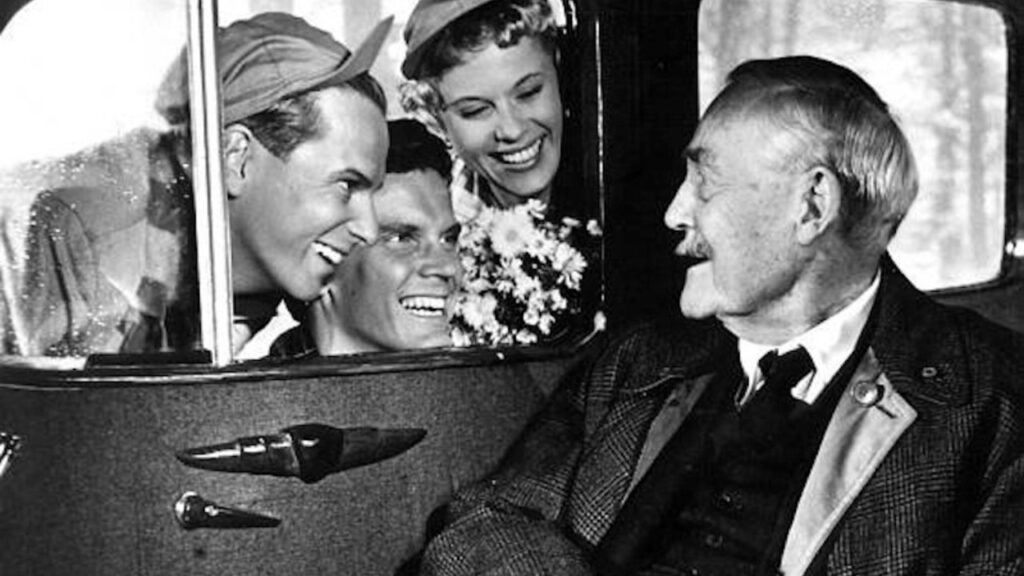
As the story unfolds, Borg comes to realize the coldness he possesses through the eyes of his elderly mother and son. These epiphanies are presented not as calls for change but as truths to accept. Upon Borg’s arrival in Lund, the honorable reception appears empty, the grandeur losing all significance compared to the transformation he has accomplished.
The film ends, then, on a note of peace rather than triumph, with a picnic by the lakes and a vision of his youthful parents grinning at him with a timeless quality that momentarily reverses the flow of years. His features relax into a soft, peaceful joy. “Wild Strawberries” never contends that a mended world is a possibility, only that a comprehended one is, and in so doing, Bergman made more than just a late flowering of a great career but perhaps a compassionate commentary on aging and self-acceptance that still touches the hearts of viewers today.