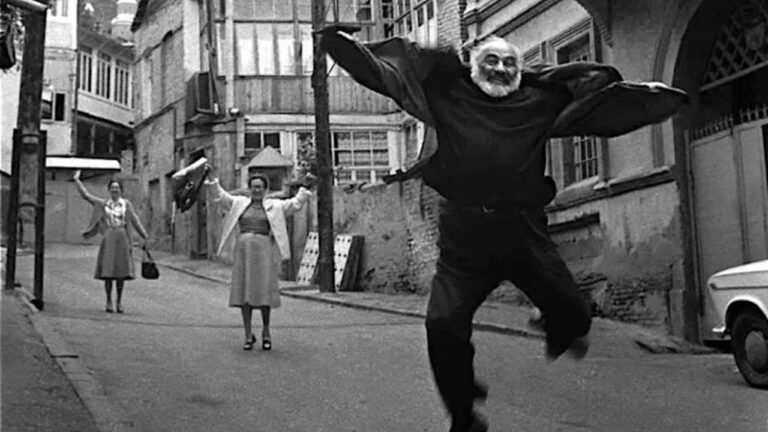
The documentary ‘Parajanov: The Last Spring’ by Mikhail Vartanov, filmed in 1992, gives a glimpse into the life of Sergei Parajanov, a Soviet-Armenian film director who is renowned for his unconventional approach to filmmaking. In this documentary, the difficulties faced by the director in his personal as well as professional life post-imprisonment and exile are discussed.
However, the life of Sergei Parajanov was also replete with innovation as well as struggles with the Soviet government. Sergei Parajanov’s 1968 film, The Color of Pomegranates, received recognition for its distinctive style and the presence of cultural elements. However, Parajanov’s nonconformity and abstract approach to filmmaking resulted in the Georgian filmmaker having issues with the censors of the Soviet government. In the 1970s, Parajanov was arrested by the KGB for immorality and anti-Soviet behavior. He also spent a few years in several Ukrainian prisons.
Documenting Parajanov’s Life Through Letters and Images
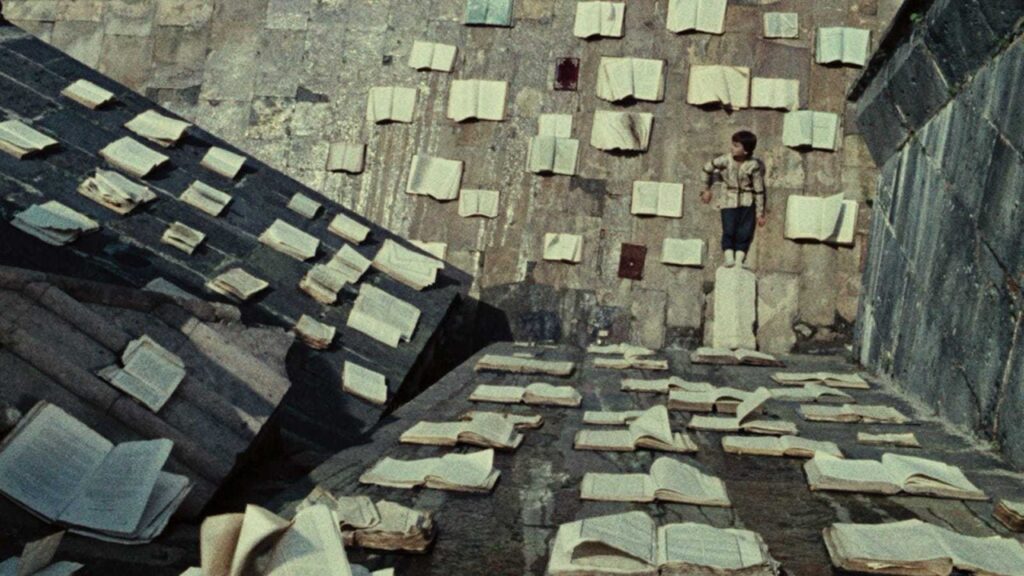
Vartanov, a friend and collaborator of Parajanov, has produced Parajanov: The Last Spring as a record of his life in the final years. The film includes footage of Parajanov at work on The Color of Pomegranates, allowing viewers a glimpse into his working methods, from careful composition to choreographing the action on screen. It also shows excerpts from Parajanov’s own unpublished autobiographical film, The Confession, that relate his personal views and interests in the final years of his life.
Another significant element of this documentary is the inclusion of letters that Parajanov himself wrote while he was imprisoned in Ukrainian jails in 1974. These letters have been incorporated into the documentary as proof of his personal experiences in jail. The application of letters as a source of information, in addition to video footage, allows Vartanov to construct a story about both his professional and personal life.
Parajanov: The Last Spring is A Primary Record of Creative Process
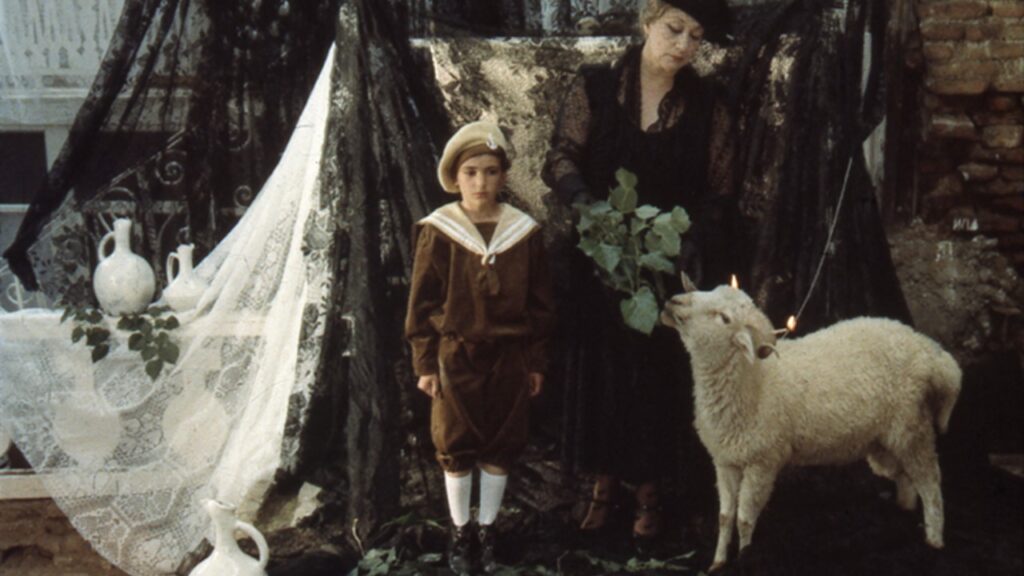
However, Vartanov’s films also show the relationship between the filmmaker and the documentarian. The fact that Vartanov understands Parajanov’s methods and that there is a level of trust between both parties allows for the recording of their activities in a manner which may not have been possible if they were recording an outsider. However, since it is the recording of their activities, this provides a perspective on Parajanov that is more than simply one that could be reconstructed from public information. Parajanov: The Last Spring does not contain any sort of analysis or interpretation of the information that is not immediately obvious from watching the footage. Instead, it offers the viewer primary source information regarding the creative process that Parajanov was a part of as well as the context in which he worked. This documentary film can be utilized within the context of understanding the latter stages of Parajanov’s life in regards to his struggles with political persecution within the Soviet Union.