
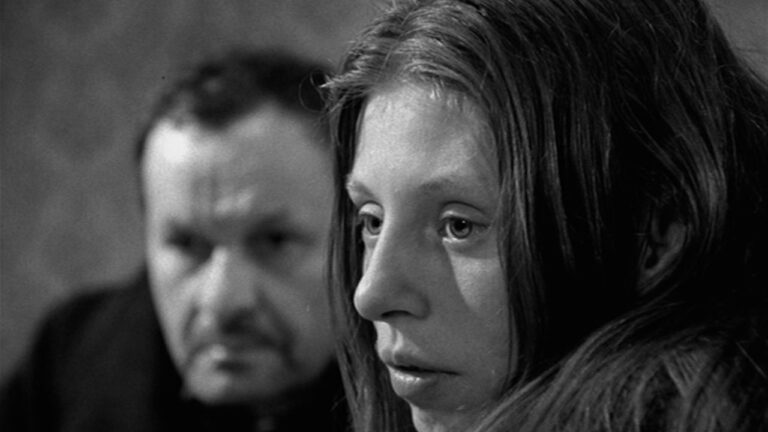
If we examine ‘The Man from London’ (2007), created by the directorial duo of Béla Tarr and Ágnes Hranitzky, we find a movie that unfolds at the speed of human indecision itself. It is an adaptation of Georges Simenon’s novel L’Homme de Londres, written in 1934. Of course, it is quite different from other thriller movies that we are accustomed to. It was produced as a joint venture of Hungarian, French, and German films, with an international cast featuring Miroslav Krobot, Tilda Swinton, and János Derzsi. This movie gives us a story that focuses not on what happens next, but on the after-effects of that action.
The movie centers on Maloin, a railway man assigned to work in a small port town. Life for Maloin, as well as the town, appears to be a struggle with worn-out looks and a dull color. One night, from the top window of his signal box, Maloin observes some unusual events taking place on the dock below. Two men are arguing; one pushes the other into the water, and as he falls, a briefcase follows. Maloin lowers himself to fish out the briefcase; to his surprise, it is packed with English banknotes. Maloin does not utter a word, conceals the money, and goes back to living his normal life as if nothing ever happened. However, from that day onwards, everything changes gradually but awkwardly. His silence starts to define his days.
Everyday life meets moral danger in The Man from London
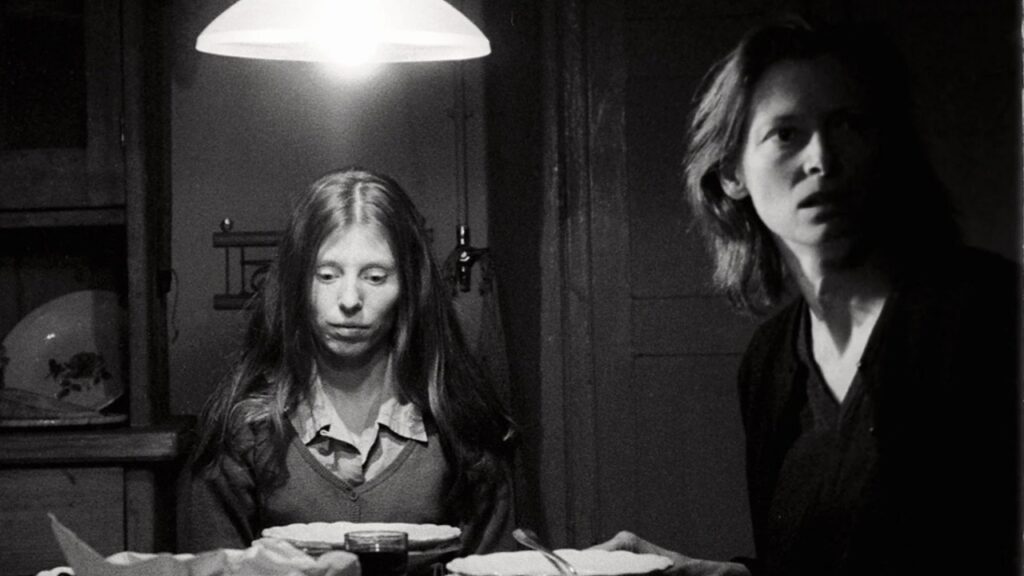
At home, Maloin’s wife, played by Tilda Swinton, feels that something is amiss but cannot define it. Maloin and his wife have a daughter named Henriette, played by Erika Bók, who finds herself in the midst of this crisis when Maloin suddenly purchases her an expensive fur stole that she did not ask for nor wants. Maloin cannot define why he acted so, and his wife’s puzzlement escalates into ire. Maloin now understands that the world into which he has entered cannot be reversed.
Then, Inspector Morrison (István Lénárt), the “man from London,” appears to investigate a missing sum of money. What happens next is not a chase, but a gradual unraveling of the conscience. In fact, when Maloin finally confesses to the murder of Brown, the killing seems less like violence and more like an exhausted release of all that has been working on him.
For Tarr, the struggles were not only in front of the camera but also behind it. The French producer of the movie, Humbert Balsan, took his own life just prior to shooting the film, resulting in the complete collapse of the entire production. It took the cast and crew of the movie over a year before filming resumed. Ironically, given that the movie involves elements of endurance and hopelessness, the actual filming of the movie reflected the same elements. When the movie was finally finished with a new budget of approximately €4.3 million, it was shown at the Cannes Film Festival of 2007 despite not receiving any awards.
Guilt and Temptation Shape Every Moment
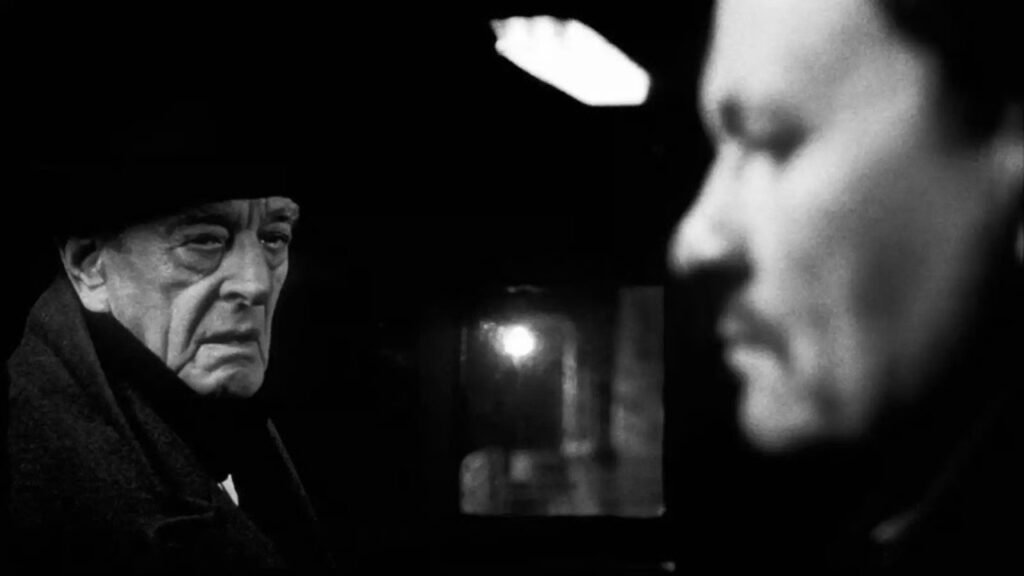
The pictures in this film say more than the words. The camera, operated by Fred Kelemen, dwells on fog, reflections on wet stone, and faces hovering between light and darkness. It takes a long time for anything to happen, as if we are watching for the slightest sound. The score, composed by Mihály Vig, is a subtle reminder of the unease that lurks in every corner Maloin turns into. We are not invited to feel exhilarated. We are simply asked to remain still long enough to witness the look of guilt that seizes a normal life.
The critics were split, as one would expect. Some praised the precision and atmosphere of the film, while others called it slow and remote. Derek Elley, a critic for Variety, stated that the best that Tarr’s efforts could achieve is to close the gap between people who believe him to be a genius and those who find him to be boring. However, whatever the critics may have said, the film itself is quite compelling because of its honesty. Nochimson would later analyze the film as a exploration of how the normal individual experiences moral collapse while being unaware of it. The film, according to Nochimson, concentrates more on the world that surrounds the crime than on the crime itself because that is where we live. The man from London represents justice that is far away, something that affects little the individuals who exist in the quiet and repetitive life routines. What we view while watching The Man from London is not heroes and villains, but hesitations, tiredness, and the ordinary ways in which people can lose touch with what is right and wrong. Tarr does not tell us how to feel, and perhaps this is why the film stays with us. It is a tale of temptation, fear, and the common face of guilt. What may haunt Maloin can easily haunt us all. Perhaps the moment of getting the chance to take something that does not belong to us, followed by the long silence that asks us what kind of person we really are.




I don’t think I have ever read an article based on Bêla Tarr’s any movie. Went through your work, you have intensively covered his famous works, kudos