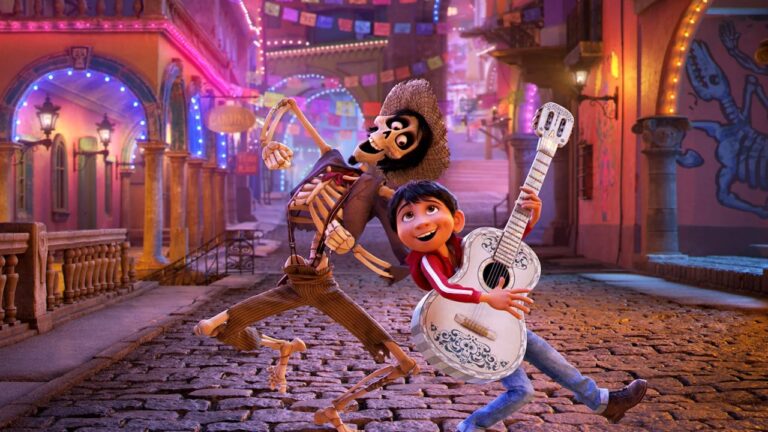
The ‘Coco’ of Pixar in 2017 is believed to be an outstanding and exemplary research work on memory, identity, and inter-family relationships as it is grounded on the theme of the famous colorful installation of Mexico’s Day of the Dead celebration called Día de los Muertos. Evidently, this movie examines the peculiar relationship between its visual expressiveness and emotionality to make storytelling a vehicle for conveying reflection and resonance.
Coco is Both Heartfelt and Universally Resonant
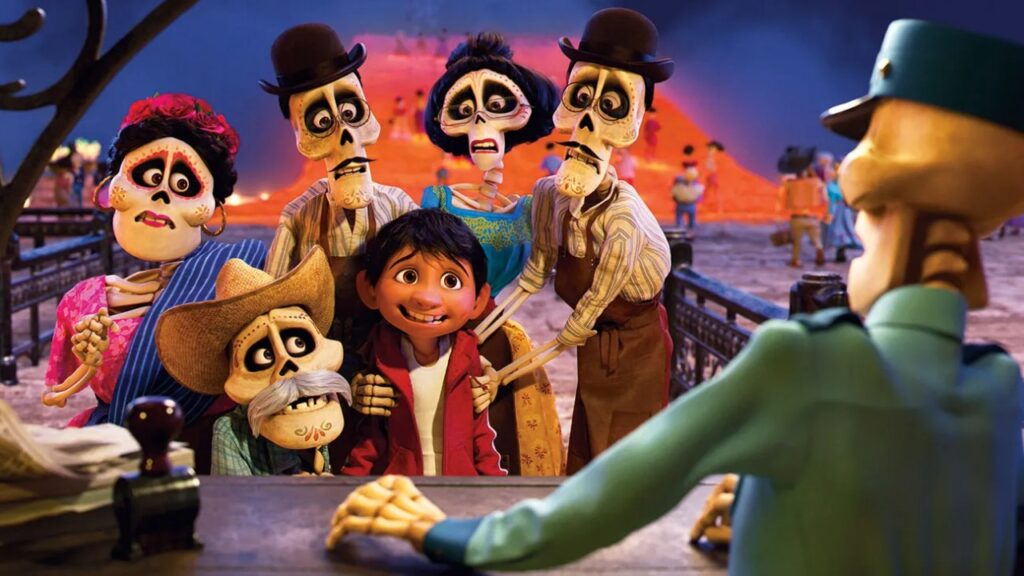
The prime narrative revolves around that of Miguel Rivera, a twelve-year-old boy, and his passionate attachment to music, in direct contrast to the harsh ban on music imposed by his family. This specific case has the tendency to transcend the boundaries of narratives as it turns out to be a model through which the movie delves into the workings and functioning of how families manage to bear their history, ideology, and trauma across generations. The journey of Miguel into the Land of the Dead could very well be explained as an imaginative venture coupled with a momentous discovery by the protagonist himself. The land of the dead stands out with awe-inspiring vibrancy in respect of marigold bridges, brilliant skeletal figures, and a throbbing urban environment.
Coco walks this fine line in regard to tone because the film introduces elements of comedy from characters such as Héctor that do not lessen the significance of the narrative but use the comedic misadventures to point the views of the film on issues such as loss and memory. The connection between Miguel’s love of music and his family’s darker history is handled with a level of narrative subtlety that does not allow issues to be reduced to simplisms, as we see in how the screenplay approaches issues such as betrayal and the fleeting nature of memory.
Coco’s Brilliance Lies in Its Honest Exploration of Grief and Reconciliation

In fact, the cultural authenticity of the film is exemplary in the sense that all aspects of mise-en-scène, from the colorful streets of Santa Cecilia to the carefully created papel picado and strings of marigolds, convey a deep sense of place and historical accuracy. The degree to which the Mexican cultural advisors were consulted adds an authenticity to the rituals, music, and architectural details that Coco succeeds in elevating beyond. The musical aspects of the film also give the viewer a sense of harmony, which is an extremely rare occurrence in the viewing experience itself, given the fact that the playlist developed by Michael Giacchino, which is chock-full of various authentic Mexican musical aspects, gives the viewer an experience of profound importance in terms of its significance to the storytelling itself. “Remember Me” has multiple layers and multiple dimensions because it portrays the philosophical aspect of the story itself, which is that memory is the passage of love even after death. It is, in the end, the humanity of Coco that makes it so special. While the skeletal inhabitants of the Land of the Dead have an interesting and unusual quality to them, they are instead filled with depth, passion, and humor. This film addresses its theme about grief, estrangement within the family, and the ups and downs of life with a certain degree of unblinking truth and reality, but also a certain degree of wonder, forgiveness, and joy. Coco is a tribute as well as a celebration because it is an investigation about the fleeting nature of life but also the timeless quality of memory. Every time it is viewed, there is more to be learned, more to be appreciated regarding the technicality and complexity of it all. In an age defined by the sameness of films in the franchise, Coco stands out as a beacon of cinematic success.