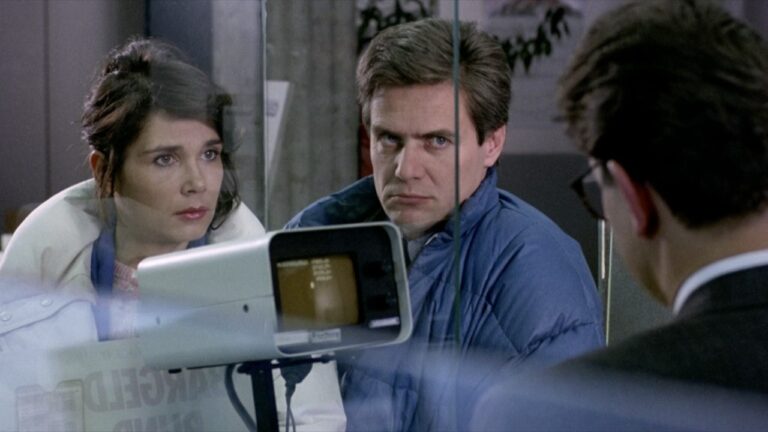
When Michael Haneke unveiled The Seventh Continent in 1989, it came without the guideposts that viewers usually need in order to make sense of tragedy. There is no backstory to explain things, no psychological unraveling, and no narrating voice to frame the audience’s thoughts. Haneke merely reveals a world whose surfaces remain pristine and whose habits remain well-controlled—and then sets the record straight when the family determines that they no longer find it possible to carry on in that world. Thus was born one of the most unnerving debut films in the history of European cinema—not so much for the things it reveals as for the fact that it so insistently chooses not to explain itself.
Announced as Austria’s entry into the 62nd Academy Awards, The Seventh Continent inaugurated Haneke’s obsession with the themes of alienation, control, and the kind of quiet violence inherent in everyday life. Indeed, the film presents a thesis that remains provocative to this day: In a society engineered for consumption and productivity, the destruction of objects, particularly money, might prove more obscene than the destruction of human life. Of course, this thesis isn’t dramatized but instead laid bare by Haneke, forcing the viewer to uncomfortably sit with the revelation.
Routine as a process of erasure
Organized chronologically over three years running consecutively from 1987 through 1988 and 1989, the film traces the existence of Georg, Anna, and their daughter Eva through a meticulously repetitive life cycle. Haneke further reduces conversational details by concentrating on shots of hands, household appliances, car dashboards, and culinary preparation. There is never an intensification of inner emotion but only function.
In these first two years, nothing specifically goes awry. The family is economically sound, professionally accomplished, and socially uneventful. However, it is this very normalcy on which Haneke sets his inquiry. The presence of human beings is progressively replaced by systems: automatic car washers, supermarket checkout lines, and office equipment. The dwelling is more of a storage space than a space of intimacy.
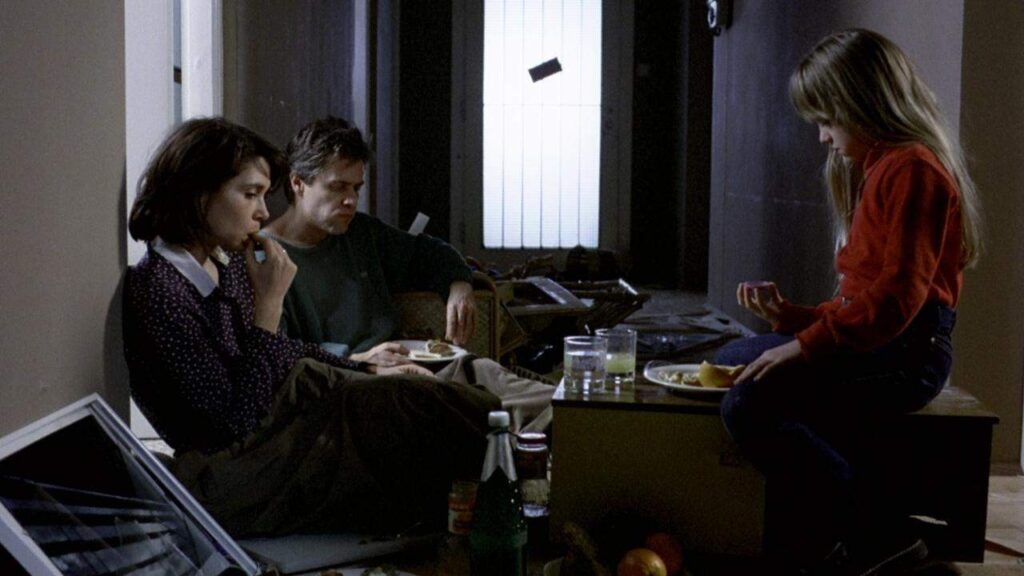
In the final chapter, 1989, the family surreptitiously starts to loosen their ties with the world. They resign from their employment, close their bank accounts, and decide to emigrate to Australia. Their deception is prosaic and almost administrative, but it illustrates the way in which disappearance can be disguised behind the rhetoric of movement and opportunity. “Leaving,” as they term it, is not a gesture of despair but of administration.
The ensuing destruction occurs with a rigor that matches the regularity of their lives. Furniture breaks, clothes are severed, and appliances are ruined. The camera of Haneke watches with neither a sense of urgency nor accompaniment, reducing annihilation to a process. Meaning unravels through order rather than disorder.
There are only three moments that disrupt the emotional emptiness. The breaking of the fish tank sparks the only actual cry of mourning in the movie as Eva screams while the fish perish on the floor—life made visible. The shredding and rinsing of the family’s savings is the most infamous act in the movie. As Haneke has said, it was consistently shown to elicit more actual audience response than the actual suicides themselves. The family’s overdosing is accompanied by Georg’s preoccupation with the static of the television screen—to be aware becomes equivalent to static.
Australia, so often figured in the imagination as a remote, inaccessible shoreline, is the key metaphor of the film. It’s not a place but an idea, a seventh continent that exists outside the parameters of social contracts, of language, of duty. Only death is the doorway. By rooting the film in actual events, found not in the bodies but in the congested pipes that are packed with shredded money, Haneke reveals the cultural hierarchy of values that continues to be profoundly disturbing. The Seventh Continent never queries the reasons behind the dismantling of the family unit. It merely wonders why the dismantling of the family is less subversive than the failure to adequately engage in the machines of modernity.