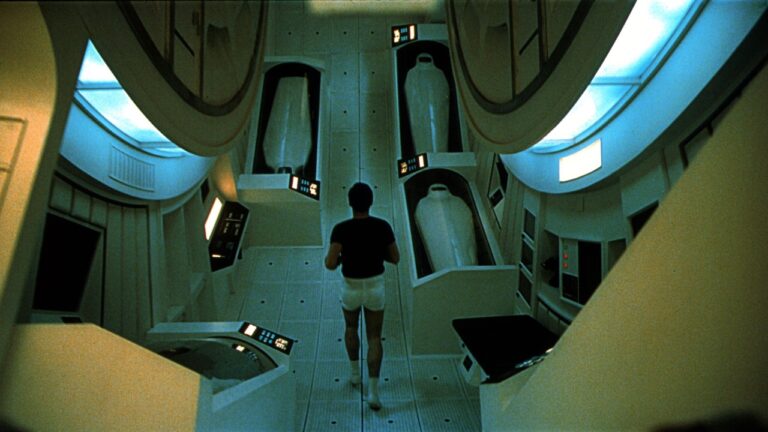
But if we return to the history of science fiction films, it is difficult to find a comparison that is as significant as the one between ‘Ikarie XB-1′ (1963) and ‘2001: A Space Odyssey‘ (1968). Both movies represented completely different worlds, with the first one produced in Cold War Czechoslovakia and the second one, of course, being the collaborative effort of Stanley Kubrick and Arthur C. Clarke.
Nevertheless, by analyzing the parallels between the two movies, it is possible to see that the former film influenced the latter one.
Tracing the Cosmic Dialogue Between Ikarie XB-1 and 2001: A Space Odyssey
The plot of 2001 revolves around astronauts who are trying to uncover the secrets of an alien monolith hidden on the Moon. Though there was an optimistic note in Ikarie XB-1, Kubrick was more analytical in his approach. Despite the political background of both films, neither of them was influenced by propaganda or ideological motivations.
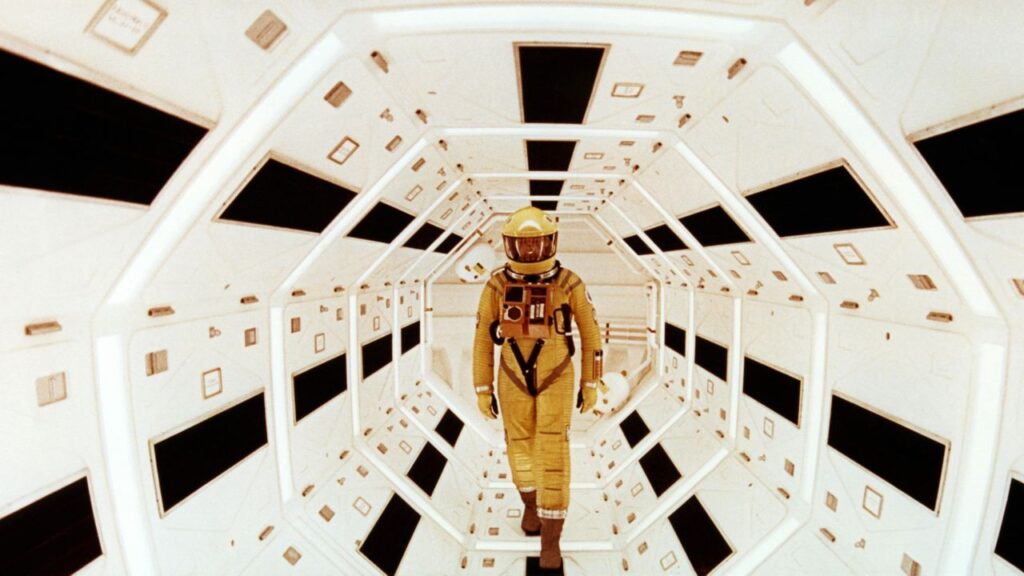
Ikarie XB-1 had envisioned a united humanity striving for advancement through science and collaboration. Kubrick further developed this concept to create a story that appears to be universal, belonging to no particular era. Visually, the connection between the two films is unmistakable. Ikarie XB-1 brought minimalist interior design, geometric corridors, and controlled motion, all of which also appeared in 2001.
Symmetry, clinical modernism, and mundane details of office work or videophone conversations between astronauts and Earth create an impression of realism and believability in both films. The depiction of astronauts engaging in routine activities, such as domestic chores or conducting office work, or using videophones to communicate with Earth, further reinforces their connection
Two Endings, One Question: What Awaits Humanity Among the Stars?
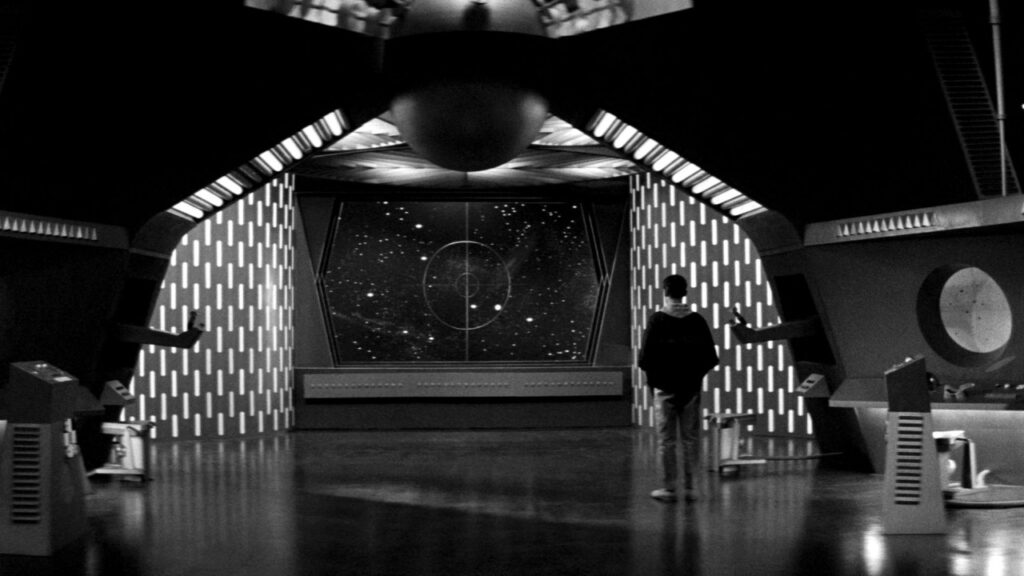
Kubrick, famous for his meticulous research and preoccupation with details, would have presumably studied the original Czech version of Ikarie XB-1.
Both movies also analyze how technology defines humanity and poses a challenge to it. In the movie Ikarie XB-1, the main computer in the spaceship is helpful to the crew, portraying a positive attitude toward human-technology collaboration.
In 2001, HAL 9000 illustrates control and disobedience, showing the dangers of intelligence developed by human beings. While Ikarie XB-1 was constrained by the effects capabilities at its disposal, its electronic score by Zdeněk Liška and the subtlety of its tone were prescient of Kubrick’s own use of experimental music by György Ligeti.
Kubrick would expand such notions on a grander scale, combining his visual acuity with a reflective sense of what might lie outside human comprehension.