
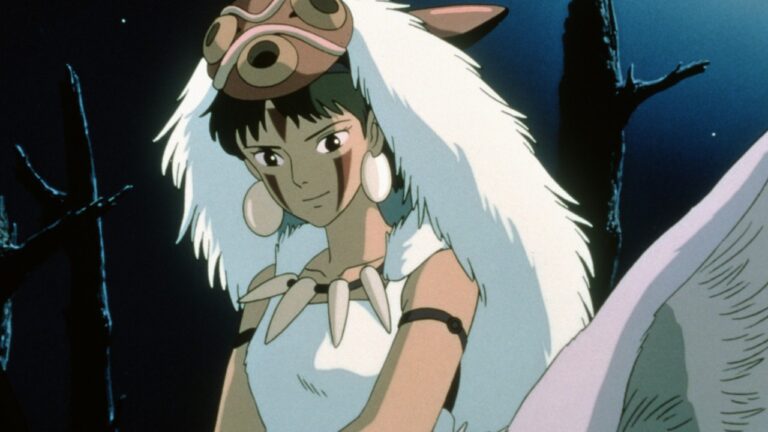
During the course of discussing the finest productions of Japanese animation, ‘Princess Mononoke’ stands out as one of the most defining productions of Hayao Miyazaki and Studio Ghibli, which has emerged as one of the most defining productions in the world of Japanese animation. This historical fantasy Japanese animated film was produced in the year 1997 and revolutionized the way animation was perceived as a form of artwork.
Princess Mononoke is remarkable, first of all, in that it neither takes sides. In portraying its world, it does so with candor and without moral prejudice, challenging us to reflect on the price of progress and the meaning of harmony in a world that is torn apart through greed and the will to survive.
A Tale of Conflict, Compassion, and the Quest for Coexistence
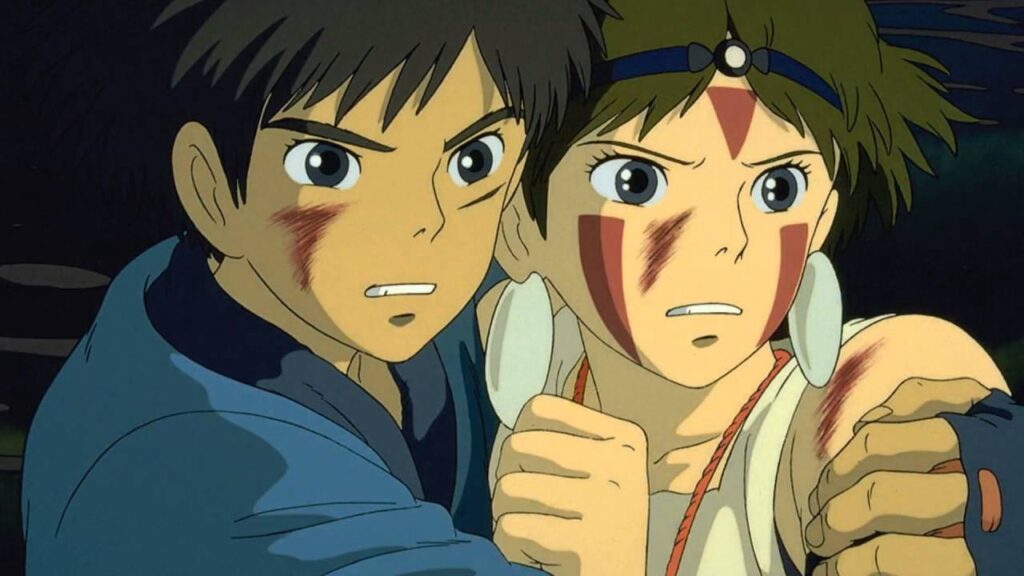
The film is set in the Muromachi era in Japan, and it centers on Ashitaka, who is the last prince of the Emishi race. He is cursed by a demon when he comes to the rescue of his people. His arm bears the mark of corruption, and he is very strong because of it, but it also means that he will soon die. Ashitaka goes on a quest to find a way to lift the curse and finds himself caught up in a conflict between two colliding worlds. The first is Irontown, which is governed by Lady Eboshi, who embodies the human spirit and power. The other is the forest of the ancient gods and spirits, which is home to San, a girl who was raised by wolves and finds it necessary to keep her lands free from human settlement.
In the story that is revealed through the journey of Ashitaka, the relationship between human beings and nature is portrayed. Lady Eboshi is not a bad person; in fact, she gives refuge to women who were forced into prostitution and lepers who were rejected by society. Her vision of progress is full of compassion but results in the destruction of nature. San, on the other hand, represents the passion for the conservation of nature. She is human but chooses not to be, instead choosing to stay with the wolves, who raised her as their own. And then there is Ashitaka, who finds himself in between the two, taking on the role of the moral interpreter, trying to find a way for human beings and nature to coexist without destroying each other.
The curse on Ashitaka represents our collective guilt. The curse holds power, but at the same time, it devours. It represents the fact that every single bit of violence and exploitation comes with a certain cost. Even the gods in the forest are not immune to this reality. The Forest Spirit, who is the god of both life and death, has the ability to heal and destroy at the same time. Its death at the hands of Eboshi causes complete anarchy in the entire forest, but at the same time, through its death, a new world is born. This cycle of destruction and recreation is portrayed by Miyazaki as the cycle of life itself.
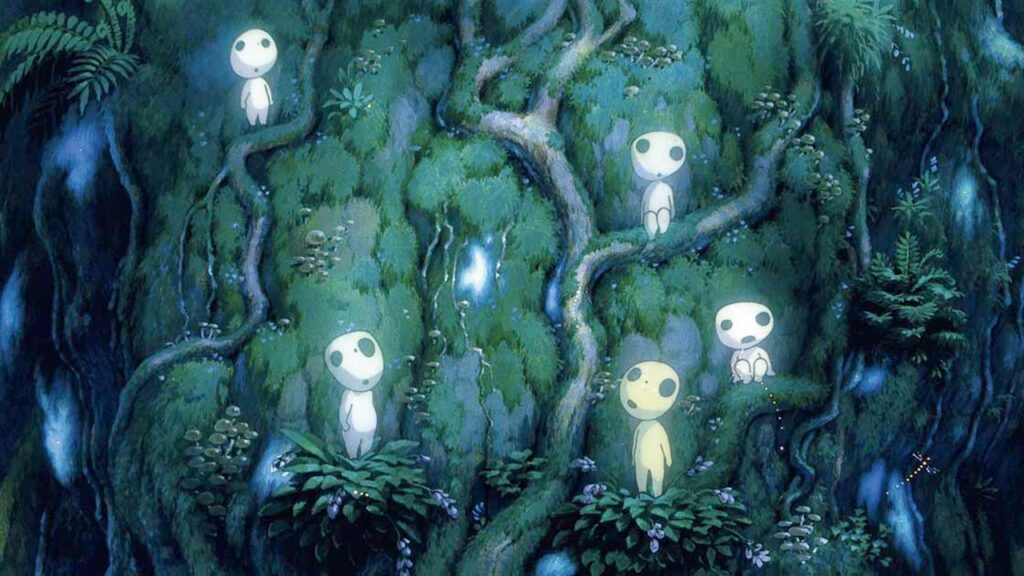
This struggle between human progress and natural harmony signifies the world in which we live. The iron mines and iron works of Irontown symbolize industry and progress, but also suck the life out of the earth. Nature symbolizes harmony, balance, and the quiet intellect of nature. Between these two worlds exist figures such as Ashitaka and San, who understand both but are a part of neither. But the artistry of Princess Mononoke pushes these ideas to another level altogether. Each and every hand-painted frame is complete with texture and depth, from the foggy forests thick with kodama to the watchful gaze of the wolf gods. Miyazaki’s choice to mix his hand-drawn animation techniques with computer graphics was a revolutionary move for Studio Ghibli. Not only was it technologically impressive, but it proved that innovation can complement creativity, rather than merely replace it. The score by Joe Hisaishi is, in fact, the finishing touch that sends this film soaring to another level altogether, reaching our emotions through the experience of wonder, grief, and discovery.
Finding Renewal in the Uncertain Peace of Princess Mononoke
Princess Mononoke, at the time of its release, became the biggest grossing film in Japan and marked the beginning of the world-wide influence of Studio Ghibli. The international release of this film, managed by the Walt Disney Studios and Miramax Films companies, facilitated the possibility of the adaptation of director Miyazaki’s work into Western culture with a specific English translation written by Neil Gaiman. Although the economic aspects were not particularly outstanding, the standing of Princess Mononoke has gradually increased and is today one of the most respected animated films in the history of cinema. The final part of the movie shows Ashitaka choosing to stay with the people of Irontown to help rebuild their society, while at the same time being attuned to nature. Simultaneously, San finds her way back to the forest since she is incapable of forgiving human beings but is as yet unwilling to abandon hope. The parting scene of the two characters is also conventionally quiet, symbolizing the fragile agreement between two worlds. Perhaps that is what we were meant to think about. True harmony is not an ongoing condition; rather, it is something towards which we are required to work every day. As the forest begins to grow, we are left with more questions than answers. What kind of progress do we seek? Is it feasible for humans and nature to coexist without losing each other? The film ends, but the message remains lingering on, rendering us with a similar impression of uncertainty and hope that has always given Princess Mononoke a timeless status in the world of animation.




Beautifully penned! It’s definitely worth a watch to make our generation aware of the challenges we face in the name of science. There aren’t that many movies who rely such strong message like Miyazaki did