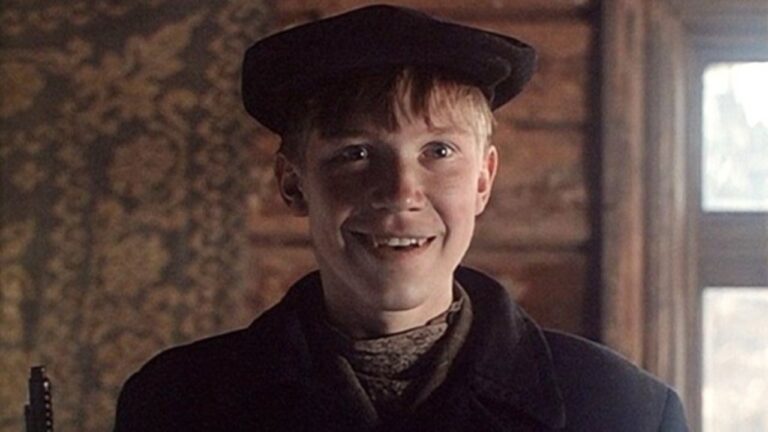
Come and See is an adventure film released in 1985, written by Elem Klimov. Based on the true events of the Belarusian partisans and co-writer Ales Adamovich, the struggle of a young boy is shown during the Nazi invasion of Belarus in World War II. The destruction caused by the occupation of Belarus by Germans and how the affected people change is depicted in this movie, starring Aleksei Kravchenko as Flyora and Olga Mironova as Glasha.
How War Shapes a Young Soul in Come and See
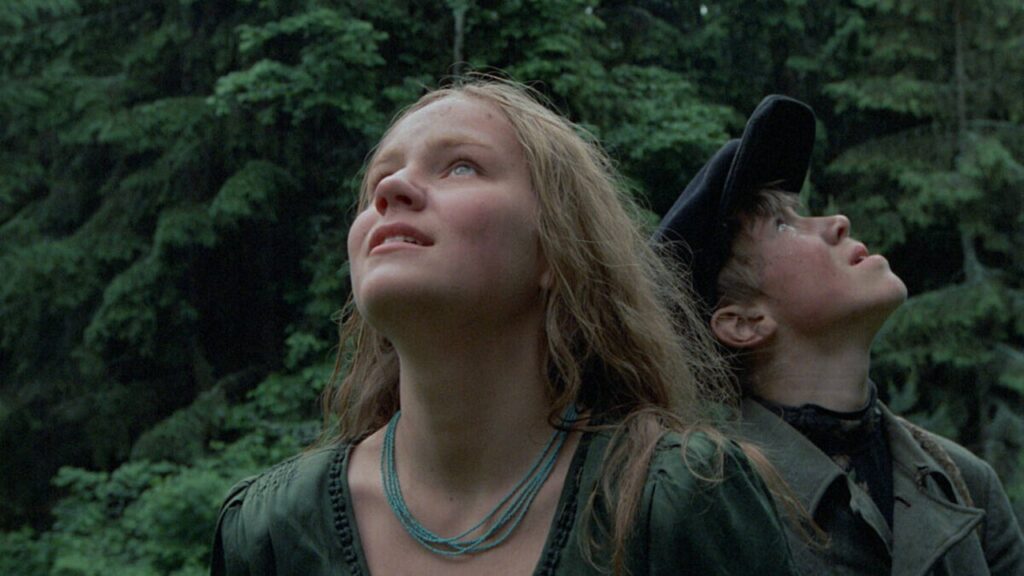
Flyora, along with another boy, in 1943, digs up a rifle from a trench to fight with the Soviet partisans against the Germans. But their village elder warns them that this will be unsafe for them. However, Flyora has ambitions of acting bravely and doing something for his country. The Fw 189 reconnaissance plane discovers what the boys were actually doing, and soon the partisans arrive to take Flyora away without bothering about his mother’s desperate cries. Flyora is given petty jobs in the camp and is left behind when others go out to fight. Feeling unwanted, he decides to take a walk in the woods and there meets Glasha, a young nurse. They had hardly spoken much when German planes attack, forcing them to hide and run away into the woods.
However, upon their return to Flyora’s village, they discover that the village is empty. Flyora cannot understand that his family is missing, thinking that they are hiding on a neighboring island. Glasha follows Flyora and discovers what he is unwilling to see, which is the bodies of his family members and villagers piled up. She calls out to him, telling him to move away, but Flyora is unwilling to believe what happened to his family. Flyora and Glasha emotionally disintegrate as they make their way through the bog, smeared with mud and tears. A partisan named Rubezh later finds them and leads them to another group of survivors in a different village. The burned village elder tells Flyora the truth about his family and warns him again about the rifle. Flyora, filled with guilt, tries to kill himself by drowning, but he is stopped by Glasha and others.
Flyora accompanies him on a mission to steal food from a German warehouse. The mission turns sour when they are caught, and Flyora’s comrades die. They steal a cow from a farmer, but machine gun fire from the Germans kills the cow and Rubezh. Flyora escapes again and finds himself in a village close by named Perekhody. The Germans soon surround it. Flyora attempts to warn the villagers, but they are rounded up into a barn along with him. The soldiers lock the doors of the barn and set it on fire while laughing and taking pictures. The people inside are all burnt to death. Flyora escapes again, but the look on his face shows that he has seen too much.
When he is reunited with the partisans, they have captured the Germans and collaborators who set the village on fire. The leader of the partisans, Kosach, has to make a decision about what to do with the captives. Some of them would like to kill them in a cruel way, but instead, Kosach decides that they should all be executed quickly. Revenge, he knows, will not bring back what is lost. Later on, Flyora finds a painting of Adolf Hitler that is lying in a puddle. He shoots at it repeatedly. The movie continues to show the life of Hitler in reverse order until he is shown as a baby. Flyora stops shooting, realizing that evil is not born, but rather made by people who could choose between hate or compassion.
A Cinematic Testament: Remembering Belarusian Tragedies
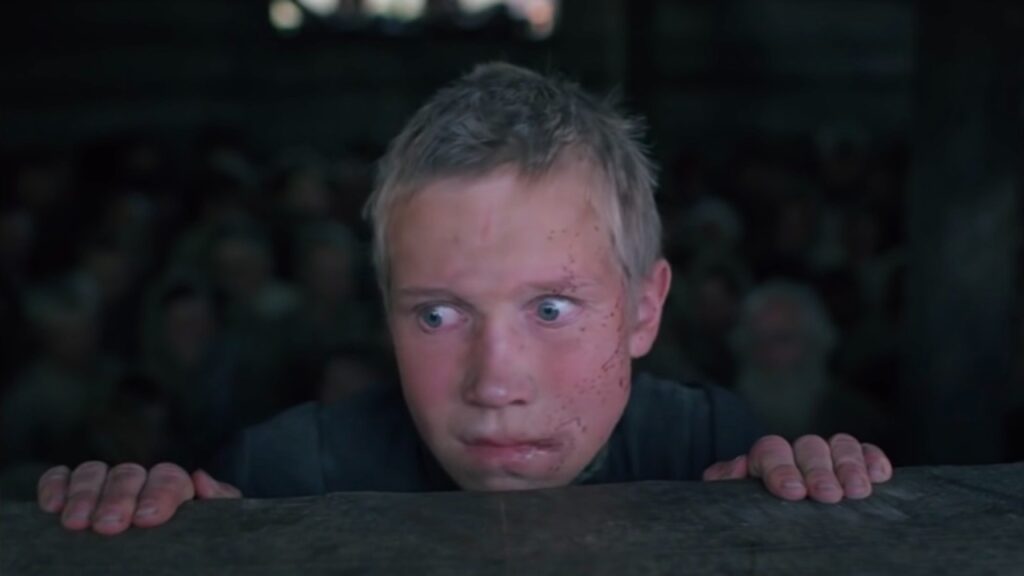
Klimov and Adamovich created the entire film out of real events that occurred in Belarus. Adamovich was also a teenager partisan himself, so he relied on real events of burned villages and massacres. Klimov chose amateur actors because he wanted faces to convey real emotions. Kravchenko, the actor playing Flyora, was only fourteen years old. In order to help him with the psychological pressure of acting, Klimov brought in a hypnotist. The actor experienced hunger, tiredness, and increased tension during the nine months of shooting. His passage from being an innocent kid to being a hollow, old face reveals the truth about war and how it affects human beings. In the end, Flyora walks away together with his fellow soldiers, his face a mix of shock and emptiness. A title card follows, reminding the audience that 628 villages of Belarus were destroyed along with the inhabitants. This is non-fiction. Klimov was trying to make the world remember the people who suffered and feel the impact of war when the human factor is removed.