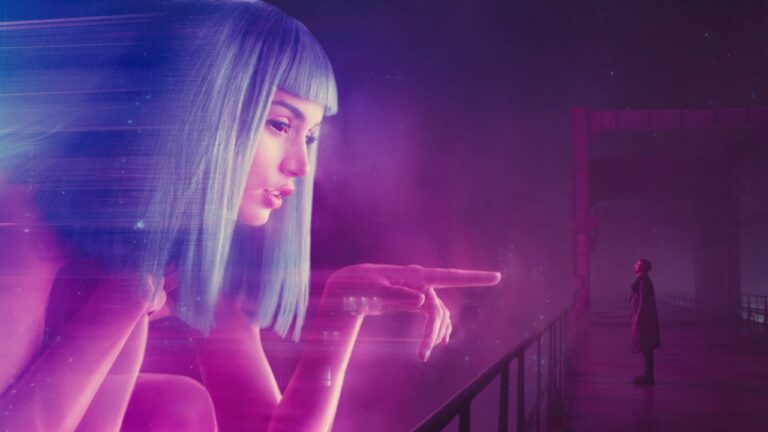
When Denis Villeneuve chose to accept the directing challenge for ‘Blade Runner 2049,’ it was not only an honor to be directing the sequel for a science fiction cult classic, but it was also an honor to be following in the footsteps of a film that had changed the landscape of science fiction in 1982. Ridley Scott’s ‘Blade Runner’ is a film that has left all of us with more questions than answers when it comes to the topic of identity, memory, and what it means to be human. It has been thirty-five years since then.
K’s Search for Meaning in a World of Ruins and Illusions
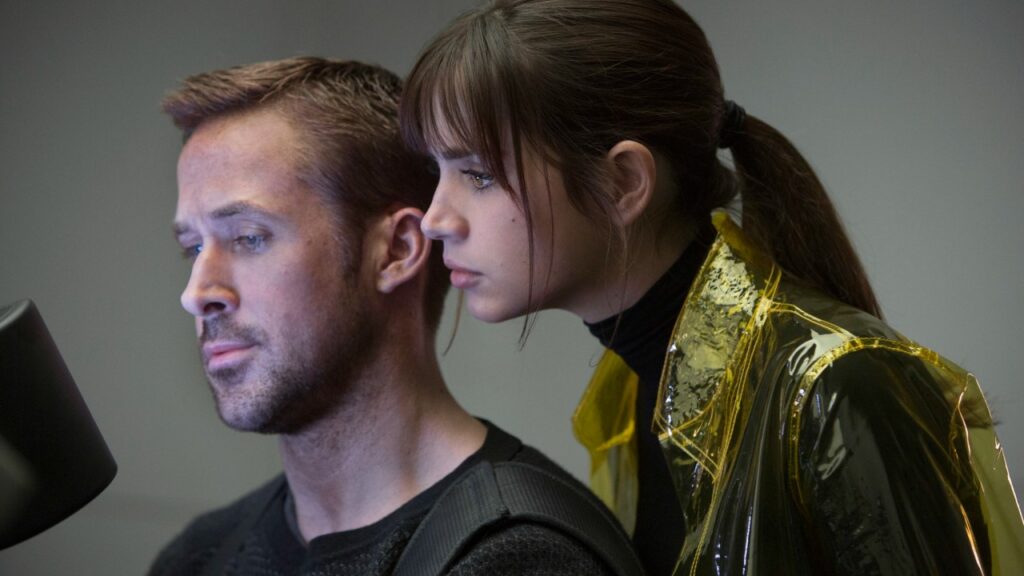
The action movie continues thirty years after the events that took place in the first film and focuses on Officer K, played by Ryan Gosling, who is a replicant and works for the LAPD, searching for rogue replicants from previous generations. His life is going well until one of his missions turns everything upside down when he discovers a secret that has the potential to destroy the social order between humans and replicants, which had achieved such a harmonious social equilibrium. He discovers irrefutable proof of the existence of a replicant giving birth and an impossible possibility that had never occurred to him before, which puts him on a journey to search for the offspring. He finds a way to contact Rick Deckard (Harrison Ford), the blade runner who escaped with Rachael in the first film.
A Sequel That Honors the Original While Finding Its Own Voice
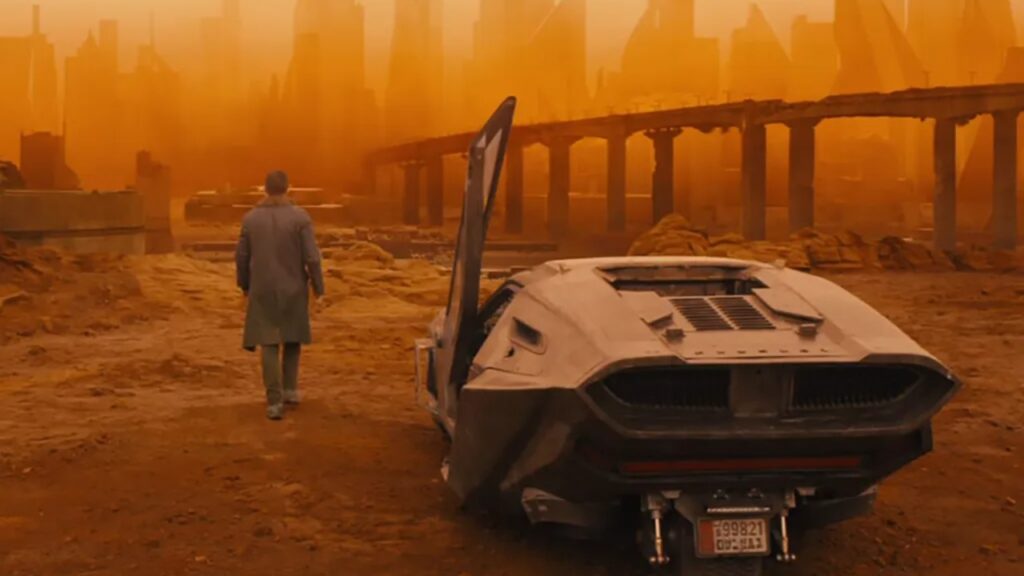
The film is very effective in making the philosophical ideas concrete. Memories, whether true or false, have a very important role in the film. While K has an implanted memory of a birthday party from his childhood, it is only a reminder of the possibility that he might be the “miracle child.” But for us, it is a reminder that the false memories too have an important part to play in deciding who we are. The most crucial point in the film comes when the memory artist Ana Stelline, in her glass box, makes this point, and we understand that it is not the truth of these memories that is important but their significance in defining the meaning of our existence. On the visual side of things, Blade Runner 2049 is a sight to behold. Roger Deakins’ camerawork is a product of a world that is at once overwhelming and intimate. The neon-lit cities stretch on endlessly, only to have the camera settle on details such as the flickering of a hologram, the dust settling in the abandoned casinos, or the snow gently falling on K’s face. This is a world that literally implodes around itself, one that has advanced to such a point that all that remains is the silence, the destruction, and the hum of machinery. The score by Hans Zimmer and Benjamin Wallfisch further cements this by layering moments of calmness over the sounds of industry. Nevertheless, while it is true that the film itself inherently has an epic scope to it, it dares not go the easy route on difficult questions. Indeed, the very question of who Deckard is and what his status is with respect to being a replicant or a human being remains much as it did in the original. Nevertheless, the follow-through on this concern continues. If the replicants can experience love, pain, and even the instinctual drive of procreation, then the divide between human and replicant ceases to have any meaning. It becomes instead one of choice, connection, and finding meaning within the ephemeral moment. Blade Runner 2049 is, of course, a great deal more than a sequel to a much-loved movie. Blade Runner 2049 is a companion piece. Why? Because it is a film that honors the original while still finding its own voice, which happens to speak softly, even as the film itself dissolves into the silence.