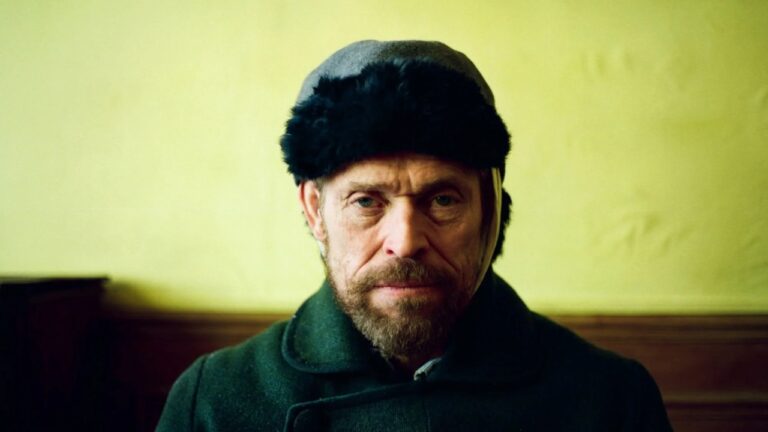
In ‘At Eternity’s Gate,’ written and directed by Julian Schnabel in 2018, we have a new perspective on the life of Vincent van Gogh. The movie stars Willem Dafoe as Vincent van Gogh, who brings a sense of stillness and intensity to the role, while other supporting actors include Rupert Friend, Oscar Isaac, Mads Mikkelsen, and Mathieu Amalric. The film initially presents us with the task of looking at van Gogh as a historical personage and as one who experiences the world in a different way. This particular version of Van Gogh that we meet is one that is extremely curious and searching for answers.
The movie is centered on the life of Van Gogh in his later years, living in Arles and Auvers-sur-Oise, France. We see his struggles as he nurtures his artistic skills, meets other artists such as Paul Gauguin, and battles his internal conflicts. It also explores the conjectures about the events that led to his death, proposing that maybe it was not a planned event but an accident. This way, we can look at things from a different angle and even question our previous understandings about his life and struggles. The movie does not take the conventional route of a biographical film to give us insight into Van Gogh’s life.
Seeing the World Through Willem Dafoe’s Van Gogh Eyes
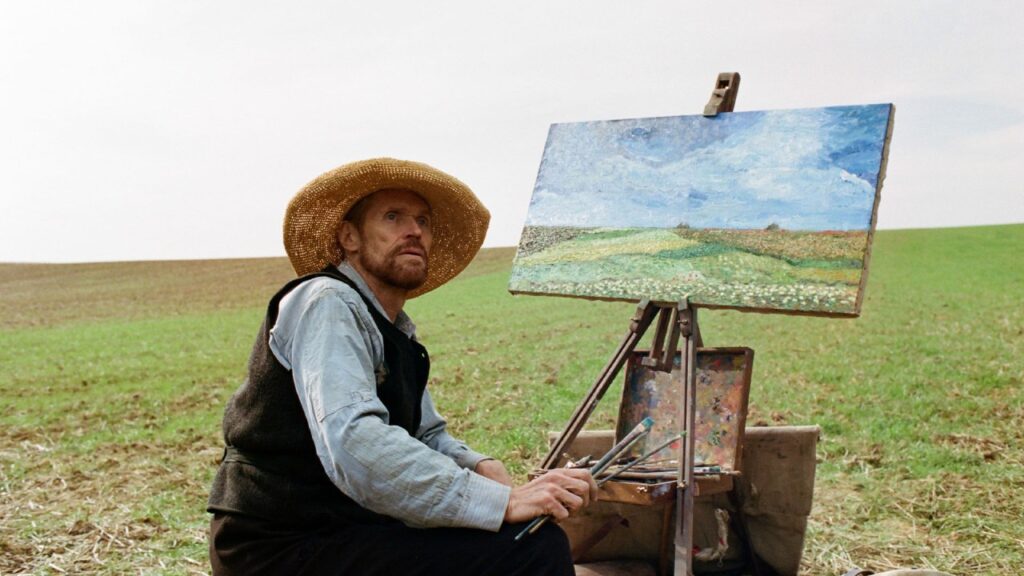
One of the most interesting things about At Eternity’s Gate is the visual style, which Schnabel achieves with a painterly eye that mirrors van Gogh’s viewpoint. The use of color and composition by the cinematographer Benoît Delhomme brings us the world of landscapes and interiors in a way that shows us what van Gogh might have seen. We see how light and color serve emotion and perception rather than representation. This makes it seem like he is painting a portrait of his inner self and how he felt about experiencing the world in a completely different way.
One of the key elements of this experience is the performance by Willem Dafoe. We experience Van Gogh as a man who is very passionate about his work, isolated, and committed to conveying the truth that he sees in the world. It is the combination of vulnerability and intensity of Dafoe’s performance that allows us to care about his experience and understand his trials and tribulations. The other performances in the movie help to add to the story. Rupert Friend plays Paul Gauguin, and we see the complicated nature of van Gogh’s relationships with other artists through his performances.
Questions, Interpretations, and the Layers of Van Gogh’s Life
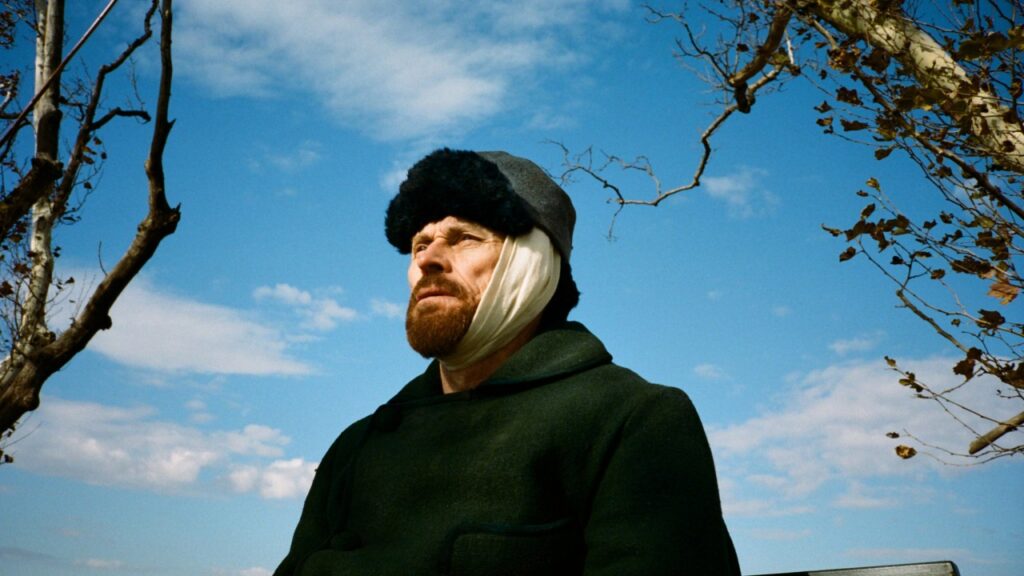
The themes of the movie are complex and well thought out. We are encouraged to explore the themes of isolation and its impact on artistic expression, looking for meaning in life, and struggling to be recognized and understood. Van Gogh is portrayed not only as a tragic character but also as someone who has a deep understanding of life and a perspective on the world that very few others could comprehend. Even through times of adversity and a lack of understanding, his passion for painting is encouraging. On the other hand, the film does not provide answers to all the questions we may have. Through its presentation of the series of events that led to the death of van Gogh as possibly accidental, the film provides room for us to interpret the life of van Gogh in our own way. We are encouraged to do so by considering the motives and emotional life of the artist and his reaction to the world around him. It is clear from the story that there is no one way to understand a man as complicated as van Gogh. How At Eternity’s Gate combines visual storytelling with performance and historical insight reminds us that biographical movies can do more than simply retell facts. It shows us that they can enable us to live through another person’s experience while challenging our assumptions about it. It provides us with opportunities for reflection, irritation, beauty, and even humor as it makes Van Gogh come alive in a fascinating and realistic way.