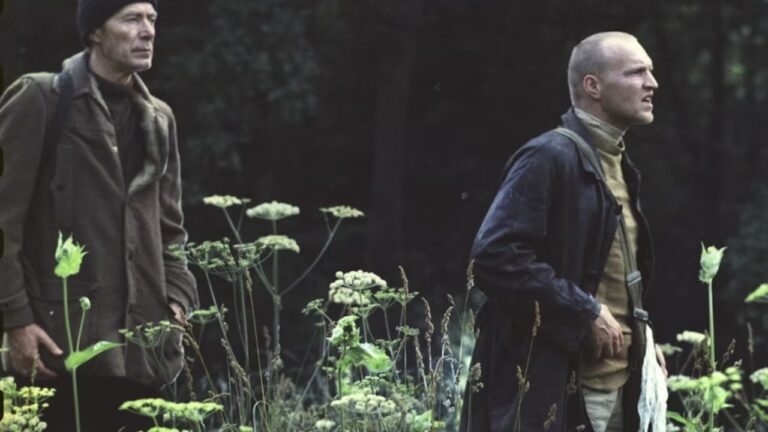
Andrei Tarkovsky’s ‘Stalker’ is a movie that demands our attention and engages our minds. Made in 1978 but released in 1979, it is the tale of a man called the Stalker who leads two men, known as the Writer and the Professor, into a place called the Zone in order to reach a Room where, it is promised, one’s deepest desire will be fulfilled. This is a world in which nothing is quite as it seems, a world in which the earth itself appears to observe and judge those who tread upon it.
The Zone is a strange region where the normal rules do not always apply. There are ruins and traces of inexplicable activity that can be deadly. As we track the Stalker, it becomes apparent that The Zone is not just a place but also something living, in the way that it reacts to those who enter it. We notice the movement of grass, the light on the water, and even the small sounds of a chair scraping. Each and every detail is important because it illustrates the care and respect that is required in order to survive in this region.
The Zone Shows Us the Choices We Cannot Escape
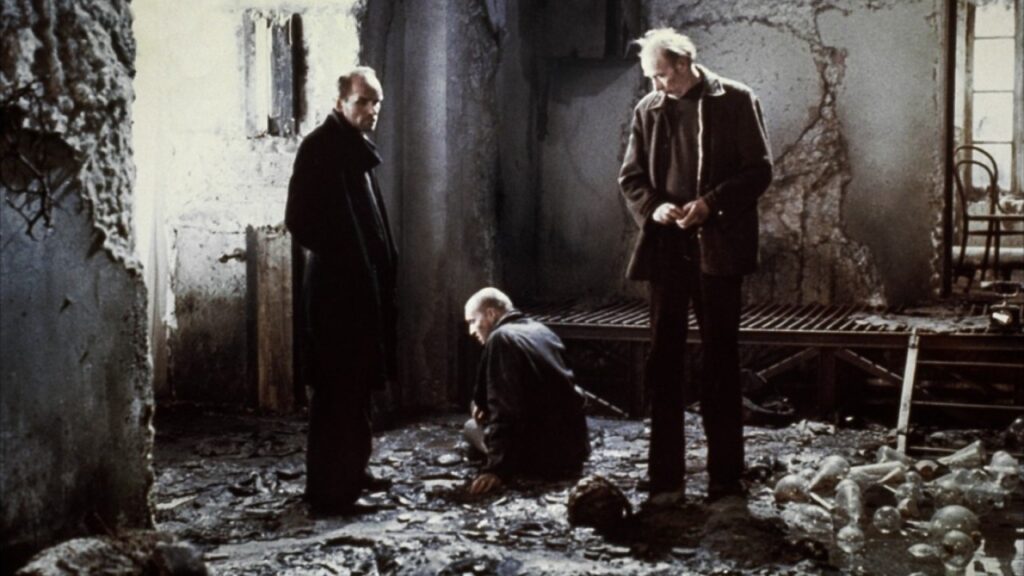
The trip to the Room is as much a journey into the psyches of the characters as it is a physical trip. The Writer is concerned about losing his muse, the Professor is curious and ambitious, and the Stalker wants to help people who are willing to confront their own reflections. And as we travel with them into the Zone, we come to realize that the danger is not just physical.
The Room is believed to be a wishing place; on the contrary, it shows what one actually has in his heart. The Stalker’s guru, for instance, desired money and was brought down by the realization of his own values as reflected by the Room. It is noticed that the concept of desire is not an easy one since it is associated with conscience, selfishness, and self-knowledge.
The instant they arrive in the Room is filled with tension. The three men hesitate because they are confronted with the truth of their own desires. The Professor, who had the bomb in order to destroy the Room, has second thoughts. Not one of them enters the Room, and we are left with the implication that the most significant element of the journey is not arriving at the Room but rather looking at ourselves. The movie reveals that it is our intentions that count more than what we seek to attain.
Tarkovsky shows us the world in a way that pulls us in. Beethoven’s Ninth Symphony is playing at times, and small noises of wind, water, and motion bring us into the Zone. The long shots put us in the position of the characters and let us see what they see, feel what they feel, and notice the world around them too. The Zone appears to have elements of both danger and possibility because it is a challenge for the characters and reveals to us how fragile human life is.
Facing Hidden Desires and the Quiet Power of Life
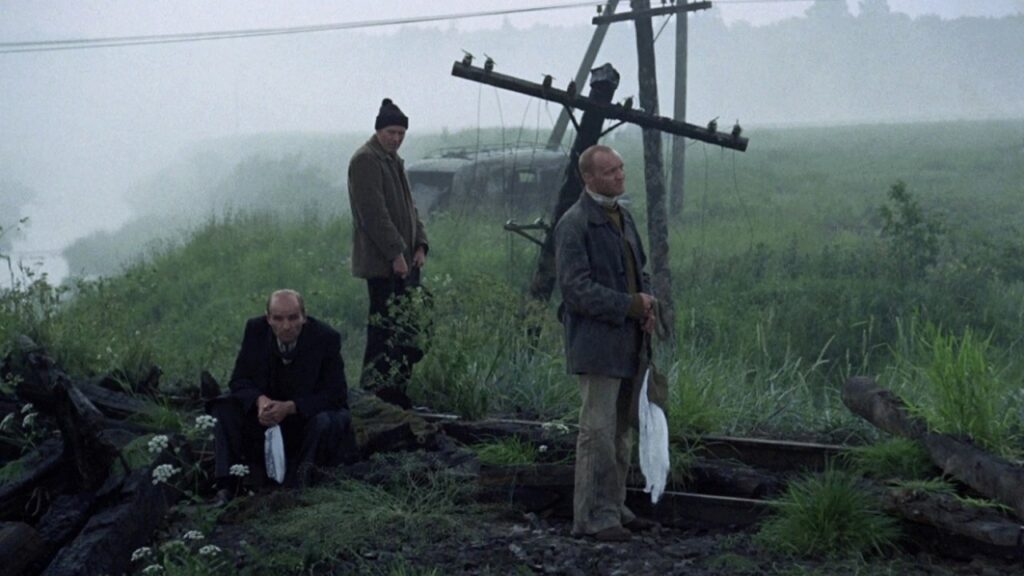
The Stalker returns home in the final scene with his wife and daughter. Life goes on as it has always done, but we see that the effects of the Zone are still there. His daughter has a small, inexplicable power, which indicates that there are mysteries in the world that we do not necessarily understand. We walk away from the film trying to make sense of our own desires and choices, and how we can be honest with ourselves about them. Stalker is a film that encourages us to look into what we carry inside of us and how our wishes affect what we do. It is a story about an unusual and dangerous region, but it is also a story about people and the way we face what is hidden in our hearts. It shows us that the path can be as valuable as the destination and that the actions we take on the path define us.