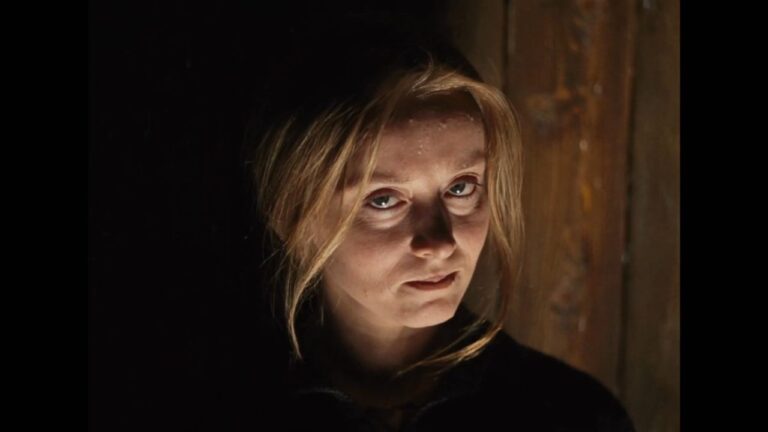
Mirror is a movie by Andrei Tarkovsky, which does not conform to the conventional form of narrative but, instead, recreates life in terms of memories, dreams, and history. The plot revolves around the life of Maria, who is the mother of the cine-substitute protagonist Aleksei. However, the point of view from which her life is projected is through the memory and perception of her son at different stages.
The film is not linear in its treatment as we witness the experiences of childhood, adulthood, and the historical ones existing together in the film. This further reinforces the idea that the experiences of individuals and collectivities cannot be distinguished in their role in shaping human experience. The memory comes across as a witness and a record.
Visual Language of Time, Memory, and Personal History in Mirror
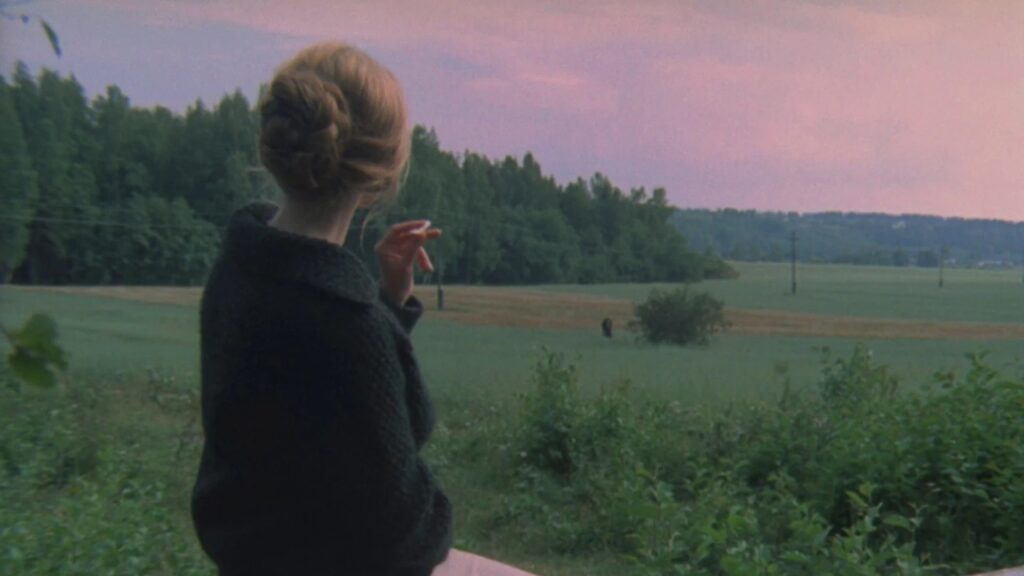
In this way, this method is also presented immediately in the opening sequence, with pictures of fields and houses and domestic interiors juxtaposed with pictures of Aleksei’s thoughts of childhood, thereby indicating that the past and present are interconnected. The presentation of the mother at different stages of her life is juxtaposed with that of young Aleksei and voiceover, thereby illustrating the idea of identity as a complex phenomenon. The merging of the domestic space and nature indicates that the space of identity and the outside world are the same thing. Time in the film does not move in a linear fashion because it traces out connections of thought and emotion as opposed to cause and effect. The historical anecdotes are woven into the movie without any comments or explanations. Of course, it is the newsreel footage and the points that refer to experiences of war, which coexist with personal memories of family life, thereby showing how external occurrences have left their effect on memory. The life of Maria, which is affected by social and political factors, is inextricably intertwined with the history of the twentieth century in Russia, and the effect of these factors is felt in her own activities, the memories of her children, as well as in her interactions with other people.
Andrei Tarkovsky Explores Consciousness and Memory Shape Identity Across Shifting Moments
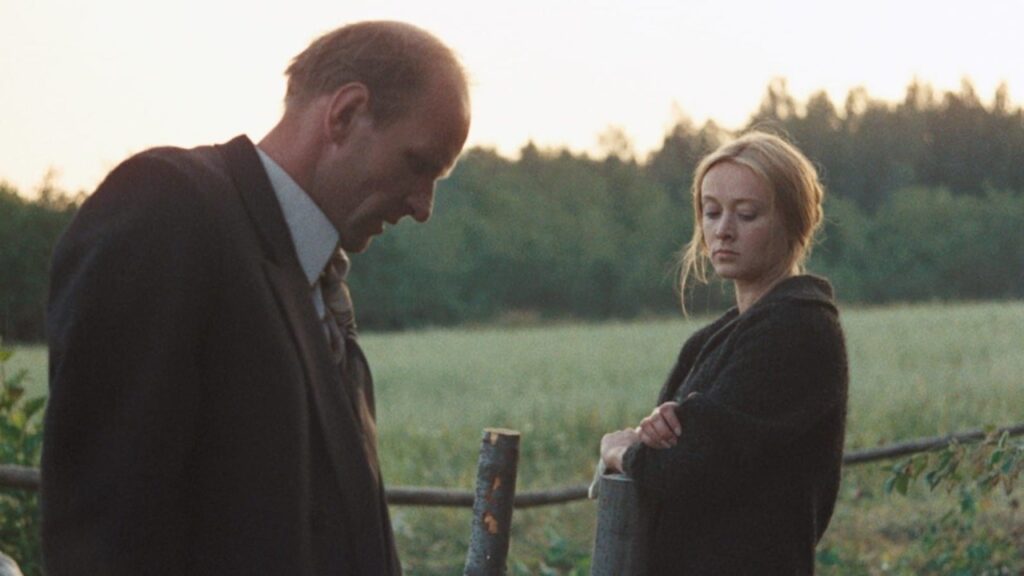
It is not that the movie breaks down these events into moral teachings, as it shows them within the realities that affect human choice and perception. The dream-like features remove boundaries between thought and memory. The occurrences of Aleksei’s childhood and Maria’s memories get mixed up in the formation of complex components of time. A situation portrays the walk of Maria through a frozen river, with constantly shifting surroundings around her, depicting the passage of time and the presence of memory. Another instance shows the burning of things as the family members stand frozen in their places, highlighting both the momentary actions and the conservation of memories. These instances show that memories are not lived through in actual form but are affected by the absence and presence of emotions, observations, and the influence of a past trauma. The final instances combine all these without arriving at any conclusions. The final appearances display the presence of the mother and son from within the blended images, symbolizing the simultaneous nature of experience and memory. Aleksei does not respond to the images of his mother or memories of his childhood in a manner of wonder; rather, he identifies these components as a part of a continuum. The final appearances clearly identify that life is as it is, with no comments or conclusions, thus stating the continuous nature of human consciousness despite the happenings of events in time. Mirror holds human experience as an element that is constructed through the principles of memory and observation.