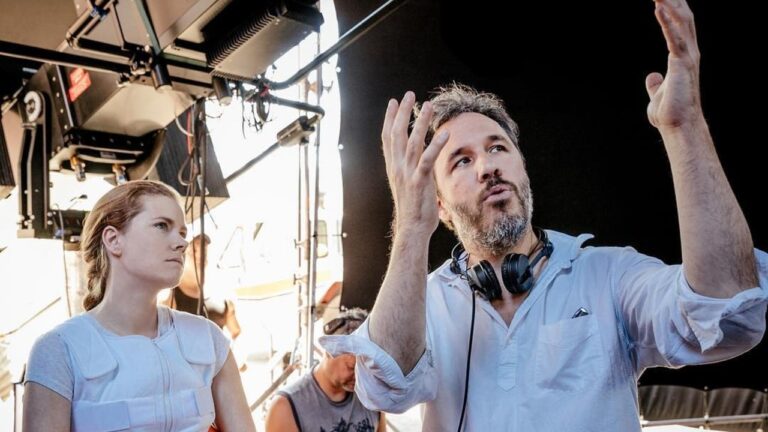
With the Gen Z crowd seemingly drifting apart from the dopamine-based short cycle of TikTok, award-winning director Denis Villeneuve believes that the trend is already changing the face of the movie business in a rather unexpected way. In a video that has gone viral and is creating a rather big buzz in the movie business, the director of the movie Dune: Part Three has been quoted as saying that the young crowd is no longer concerned with ‘snackable content.’
This is happening at a time when the film industry in Hollywood is obsessed with reducing the running time for movies they release while directing them in a way that is algorithm-friendly. The views expressed by Villeneuve are actually contrary to what is happening in the film industry, since it seems that Villeneuve thinks that the death of the audience’s attention span has been exaggerated, particularly for Gen Z viewers.
The Oppenheimer effect
To support his claim, Villeneuve pointed out the example of the biopic movie directed by Christopher Nolan about physicist J. Robert Oppenheimer called Oppenheimer. This is a historical drama movie released in 2023, rated R due to its mature subject matter. The movie is about nuclear physics. The people who watch this movie the most are youths.
“The public was young. That was the movie of the year by far for my kids. There is a trend,” Villeneuve noted. “The youth love to watch long movies because if they pay, they want to see something substantial. They are craving meaningful content.”
As Villeneuve observes, the saturation in ultra-short content has given way to an unexpected counterculture. After days of scrolling through 15-second videos, the mere act of sitting in the dark for hours, fully absorbed in one story, has itself become its own form of prestige escape. The feature film has become a symbol of commitment.
This is also in line with what is being witnessed in terms of box office behavior in the year 2026. The fact is that because prices have never been this high, people are becoming more aware of what they are spending simply to see their films. Young people, in particular, want to feel as if they are getting what they pay for.
Gen Z wants less stimulation and more smart storytelling, continues Villeneuve. A film about talk, mood, and ambiguity is something you can’t get on social media. A 90-minute film can be transitory. Transient. But three hours of film is an event. Gen Z doesn’t want the same stimulation in their media.
This philosophy can be seen through the list of projects that this person has under his direction. Dune: Messiah, which is anticipated to be released in 2026, is already anticipated to be almost three hours long, continuing with this philosophy of taking his time to tell a story. This philosophy will, of course, be seen with his other projects that he has under his direction, such as James Bond and Cleopatra. The message here is clear: Don’t shortchange the audience. The answer to the problem of underestimating the importance of cinematic movie-going experiences, as expressed in the words of Villeneuve, is found in involving the youth as active, and not as passive, recipients.
The phenomenon that has come to be recognized as The Oppenheimer Effect appears to propose that a quiet revolution is just around the corner for this sector—a recognition of quality and seriousness as its own value statement. The next generation that appears to be disillusioned with the frenetic energy of TikTok seems to have an appetite for cultural touchstones that require a story that will capture their imagination and stay with them long after the last shot fades into black. Villeneuve has an important message for Hollywood. The kids aren’t bored. They’re waiting for something worth sitting through.