Following almost a decade of cultural domination, Stranger Things brought the curtain down on its narrative arc with a finale that seemed less like a bold statement and more like a compromise with itself and its history. From a small, Spielberg-adjacent mystery for missing children and government conspiracies in 2016, Stranger Things grew into a two-hour spectacle burdened by its own sense of anticipation. The series finale, “The Rightside Up,” brings scope, emotions, and drama—often, but not always, surprise.
Every trick in the Duffer brothers’ bag is brought out for the finale: lots of CGI fight scenes, lots of character monologues, lots of fake death scenes, simultaneous fights taking place in multiple dimensions, and an entire cast of characters all demanding closure. But for all the fanfare, the finale goes for the simplest, most comforting resolution possible.
It is not a disastrous close. But it is a guarded one.
When nostalgia becomes a crutch
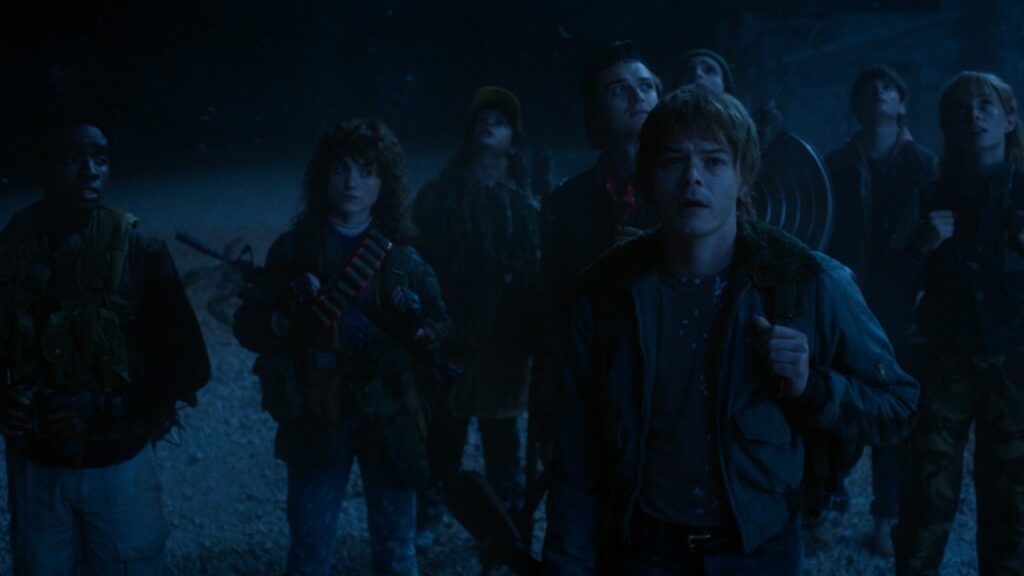
The most striking thing about the finale series as a whole is the degree to which it relies on callbacks and symmetry. Radio masts reflect back moments from past seasons. Character interactions recall past patterns. Emotional moments momentarily hold back the apocalypse so that characters may declare long-standing emotions or reiterate themes the series has already articulated. Where nostalgia was the secret sauce of the series in the past, it has become the driving engine of the storytelling process.
Rather than building tension, this episode often punctures it. There is temporal spacing for dramatic speeches when urgency is required. The feeling of peril never quite sticks because there are always assurances that everything will be all right—and even if they seem to be dying, they hold a pose long enough before the angle implies something else might be happening.
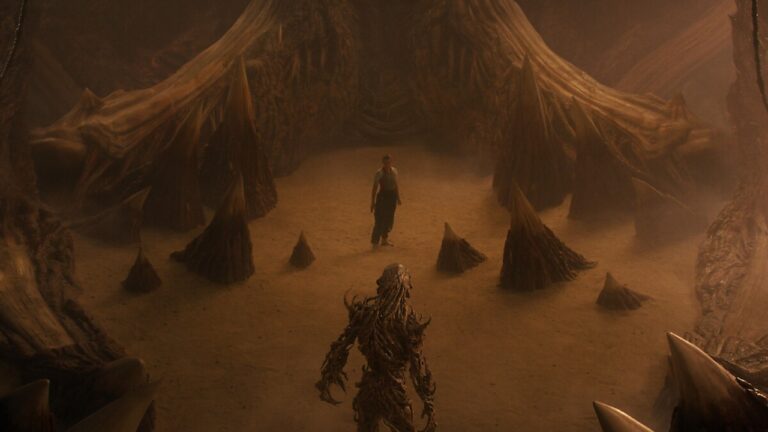
The most extreme manifestation of this safety-first mentality is clearly the reveal that Vecna is, in fact, not really a villain at all. Instead, the Mind Flayer becomes the true enemy, which feels like a cop-out regarding one of the more interesting villains they had going. Vecna had merit in that he was human, malevolent, and personal, rather than simply loud or flashy.
Spectacle is required in the finale, but it is not enough to replace the concept of stakes.
Closure without consequences
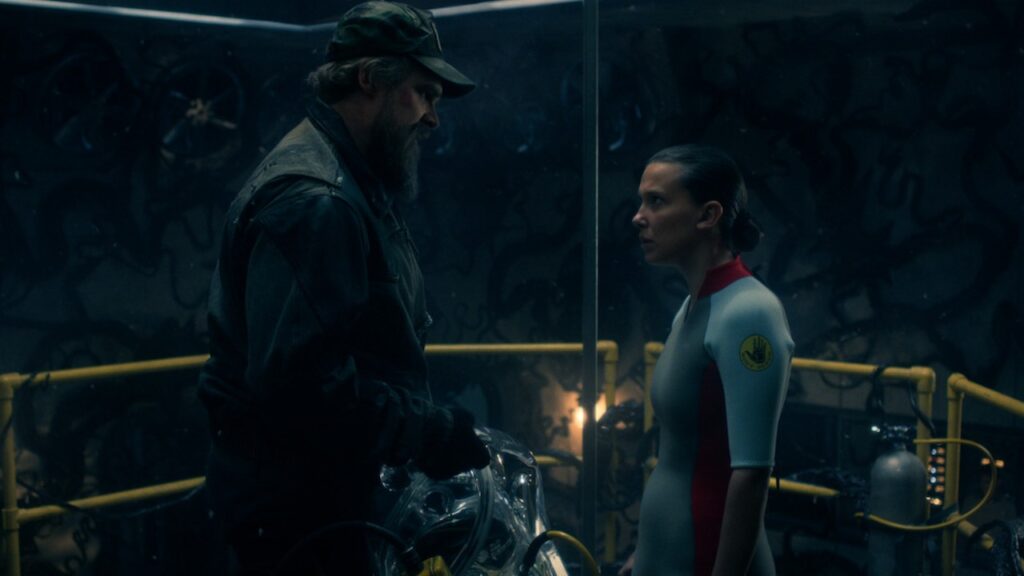
Before the dust has a chance to settle, the aftermath of the events in Stranger Things reaches a level that is almost indulgent in terms of an epilogue. Eighteen months pass, and the end result? Almost everyone is alive and well and on the correct path in life. Careers and relationships in the group have been solidified. Trauma has been incorporated into their world and powerfully symbolized in speeches and gestures. The military presence that threatened their world all season? Gone without an explanation.
The series winks at the idea of sacrifice with the presumed death of Eleven, but this is quickly alleviated with uncertainty and optimistic speculation. Instead of embracing the notion of loss, the series offers the audience the option to ‘choose’ the more positive outcome. As much as this could be considered gracious, this all just seems like dodging.
The last page—passing down the Dungeons & Dragons game to the next generation of kids—works well to invoke an emotional response in the reader, but does so very clearly and heavy-handedly. It’s a metaphor, but not a subtle one. The loss of childhood is acknowledged. The stories go on. The baton is passed. The series does not have faith in the reader to pick up the emotional complexity of the moment.
Ultimately, Stranger Things ends up giving the audience a message of reassurance, as opposed to a question or a risk. This series clearly wishes to be remembered as a nostalgic piece and not a divisive one. This has a great deal to do with the fact that it is a worldwide Netflix series, but it has a great deal to do with the empty feel that the series has when it concludes. Stranger Things didn’t fail. It just decided not to surprise us one last time.