
Apple TV+ viewers are abuzz with Vince Gilligan’s science fiction drama Pluribus and have rapidly moved from being curious about the show to comparing it to the already iconic Rick and Morty storyline. Many viewers have drawn a striking similarity between the show and the acclaimed Rick and Morty storyline ‘Auto Erotic Assimilation,’ in which Rick reunites with the powerful hive mind called ‘Unity,’ which has the power to suck an entire population into a collective consciousness.
The similarity seems to be no less in the story of ‘Pluribus,’ in which the entire planet is united in a collective intelligence called the ‘Joining,’ and the only person thinking independently remains Rhea Seehorn’s ‘Carol.’ This similarity was particularly vocal in Episode 8, ‘Charm Offensive,’ where ‘Carol’ has a complex emotional and romantic relationship with ‘Zosia,’ who, importantly, represents the entire planetary hive.
Where the shows converge — and split apart
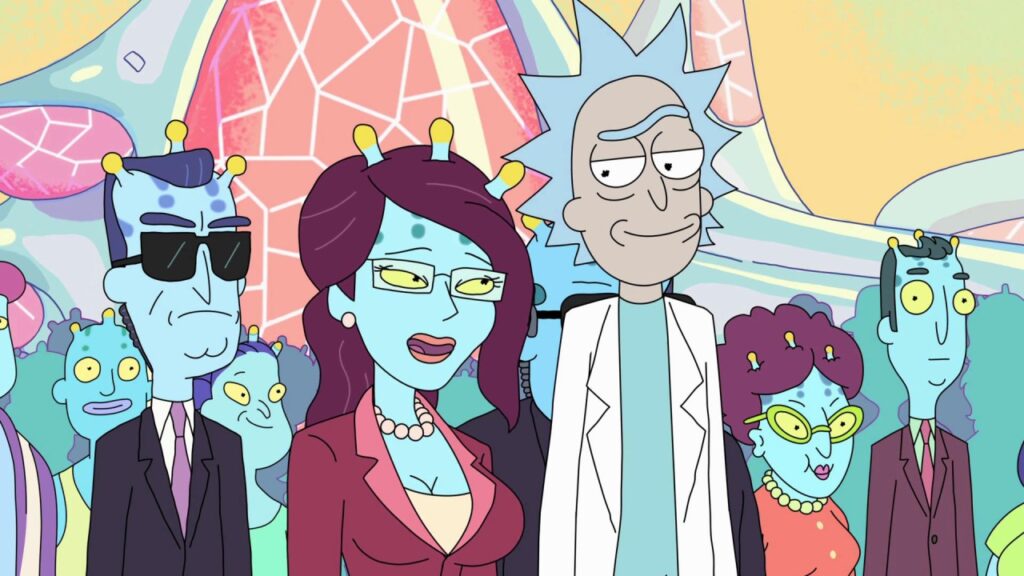
Like in “Unity,” a member of the Joining speaks through many bodies while manifesting a single intelligence. This is a start because, just by this one aspect, a comparison can be made relatively easily. Some will argue that there is a distinct personality, motivations, and desires present in the Joining, apart from retaining a set of memories from humanity, although there is something there that is recognizable from what was in “Unity.” Perhaps what Pluribus presents is a reversal of what is presented in that episode, in that what is in “Unity” is essentially a foreign entity that takes over a culture, but what is present in “Pluribus” is humanity itself, if it can be believed.
While “Rick and Morty” would distill this point in half an hour, “Pluribus” would present this in hours of programming, examining this in a character study that is manifestly deliberate in intent, at least from a psychological aspect. In a study concerning traumatic psychology and consent, that is a marked departure from many shows in that particular genre in television programming, by exploring this in a narrative that considers itself at a deep, personal level in that exploration concerning motivations related to the show.
“Rick and Morty” episode 8 continued the theme and reflected Rick’s infamous love affair with Unity in Carol and Zosia’s very earthly and quite problematic relationship. It has been referred to as an overt homage. Others refer to it as simply good science fiction storytelling that returns to an evergreen theme that has already been examined in classics such as the Borg from Star Trek.
It’s clear that what Gilligan is doing here is not surpassing an homage. Regardless of what Pluribus is doing—borrowing, building, reinventing—the dialogue proves one thing: this show has found a chord to strike home. The hive mind is not just consuming characters; it’s consuming audience members into a conversation far bigger and more complex than any one episode can contain, one that speaks to the very meaning of being human when the hive might just know more about you than you do yourself.